Wednesday, April 30, 2008

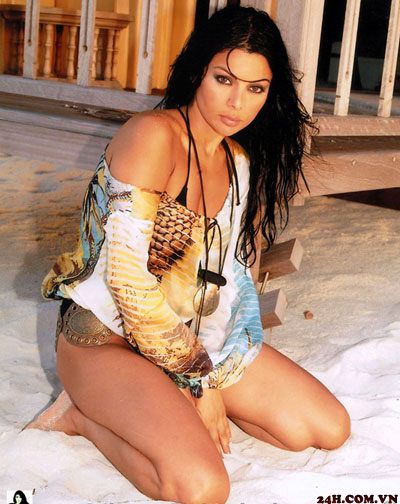
Another Haifa Wehbe controversy, this time Bahrain

Thanks to a comment on an earlier post, I've been alerted to the latest Haifa controversy--in Bahrain, where MPs want her performance banned. An excerpt from the BBC report, dated April 30:

A raunchy Lebanese singer is causing controversy in Bahrain, where she is due to perform for the first time.

All but one of the members of the Gulf kingdom's Islamist-dominated parliament have approved a motion urging the government to ban Haifa Wehbe's show.

They objected on the grounds that the pop superstar's performance would be sexually provocative, violating Islamic conventions and Bahrain's traditions.

Organisers had earlier promised she would dress modestly during the show.


And just to remind hawgblawg readers what the MPs are objecting to:


More Haifa posts here, here, here, and here.

Wednesday, April 16, 2008

More on hip-hop kufiyas

I'm still gathering information. I talked to a friend who keeps pretty good track of these things, and he says that "old school" rappers who were known to wear kufiyas include Stetsasonic, EPMD, and Paris. I've not yet found any photographic evidence, but Paris makes intuitive sense, given his militant, Black Pantherish politics. Stetsasonic were conscious rappers, from NYC, where kufiyas were very common in the 1980s, so it's possible. EPMD? From NYC, so again, possible, although not as convincing as Stetsasonic to my mind.

The back cover of King Sun's 1990 album, Righteous But Ruthless, shows Sun sporting an all-black kufiya--definitely not a "Palestinian" style one. (The guy standing next to him--possibly producer King Shameek--is wearing a fez/tarboush.) King Sun never made a big impact, but was one of many influential rappers of the late eighties and early nineties who belonged to the Nation of Gods and Earths (Five Percenters.)

Method Man (of the Wu Tang Klan) reportedly appeared in a kufiya in a video (but not "PLO Style, as I would have guessed.) I'm still trying to find which one. He also reportedly wrapped himself in a Palestinian flag in concert. Mos Def has worn a kufiya in concert as well, and has performed at benefits for Palestinian causes. (Mos Def is a "conscious rapper" as well as a Sunni Muslim--as opposed to belonging to the Nation of Islam or the Nation of Gods and Earths.)

And another Lupe spotting--an old one, from the cover of XXL (last October):

Tuesday, April 15, 2008

Faux-kufiyaspotting: Jay-Z (Kanye stylee)


Thanks to John, I think a now have a photo of Jay-z on the Letterman show--the incident that some say gave a boost to the hip-hop kufiya movement. Here's a photo of Jigga arriving to appear at The Late Show, last October. The "kufiya" is of the faux variety, in the style of Kanye West (kufiyaspotting #30, below). The photos is from Celebrity wohoo.

Kufiyaspotting #31: Jermaine Dupri, Chris Brown


I've been asked to comment on the recent popularity of the kufiya in hip-hop circles, so I decided to hunt for more images and do more research. Of course, the kufiya in hip-hop is not "new" but dates back to the mid-to-late 80s, at least. Just as the kufiya has been around in political circles in the US since the early 70s, and in hipster circles since the mid-eighties.

Some claim that the latest upsurge in hip-hop kufiya wearing was incited by Jermaine Dupri (pictured on left), and given another jolt when Jay-Z showed up on the Letterman show wearing one (I've not found a photo of that one yet.) This may be the case, but Jermaine and Jigga were following trends and then taking them into more visible venues. They did not initiate hip-hop kufiya wearing. (On the right is Chris Brown.)

On this blog, I've "spotted" Houston rapper Chamillionaire (born Hakeem Seriki), Lupe Fiasco and Kanye West, The Cool Kids, Everlast (here and here), and Aki Nawaz of Fun>Da>Mental.

More to come!

Monday, April 14, 2008

More kufiyaspottings: DAM at Sundance


Tarantino
Originally uploaded by RJ Maccani
This is a great set of photos from Sundance, taken in January, featuring some of the stars of Jackie Salloum's film Slinsgshot Hiphop, which is about Palestinian rap. The guys from DAM and Mohammed of PR hang out with the likes of Quentin T., as well as important US hip-hop artists like M1 of Ded Prez and DJ Spooky and Chamillionaire (who sports a kufiya). Kufiyas abound! Check out all the photos.

Kufiyaspotting #30: Lupe Fiasco (and Kanye West--maybe)


A big "shukran" to Mark, who spotted this image for me, on the homepage of Lupe Fiasco's official website. Unlike most other celebrities who have donned the kufiya, we can be pretty confident that Lupe knows something about the Palestinian resonances of this symbol. Lupe (born name Wasalu Muhammad Jaco) is a Muslim, is quite open about his Muslim beliefs, and his father is African (I've not been able to determine which country). Besides the kufiya, there is also the cover of his latest album, The Cool, which features English writing made to look like Arabic script. (It says "Lupe Fiasco.")

Kanye West is featured on the cover of the January 2008 cover of Spin, as co-entertainer of the year, along with Daft Punk. This photo is from Spin's feature article on Kanye. It's a faux kufiya, it evokes kufiya. I guess it belongs here, I've finally decided, since being alerted to it by Chris (thanks!) a couple months back.

Sunday, April 13, 2008

New from The Guevara Connection: "Gaza Calling" from Convention 303


You've gotta listen to track five! Dave Watts, who runs The Guevara Convention, describes this track, and the group, here. It features a phone call from their Gazan friend Bilal, who's trying to call the United Nations. "Hello...where are the United Nations? Can you hear me?"

All of Gaza is wondering, where are the United Nations?

Fun'Da'Mental Update (of sorts)

I'm about to give another talk about Fun'Da'Mental, and I'm trying to update myself on Fun'Da'Mental happenings. So here are a few tidbits.

First, a video clip of Nawazish Ali Khan, who has performed and recorded with Fun'Da'Mental for a number of years. (If you buy the All Is War bonus CD, you will find a number of essential Fun'Da'Mental vids as well as a documentary about Fun'Da'Mental. The documentary has some interview footage with Nawazish and also some concert footage featuring Nawazish. His most notable recording with Fun'Da'Mental is his vocal track on "Ja Sha Taan," from Erotic Terrorism.) The clip here features Nawazish at a Fun'Da'Mental concert, singing and playing harmonium without backing. I believe he is singing the praises of Ali ("Mullah Ali"), the 4th Caliph, cousin and son-in-law of the Prophet Muhammad, who the Shi'a regard as the rightful successor to the Prophet.


Nawazish continues his lesson here.

The second item is from a report on Fun'Da'Mental's trip to Prague, where they performed in December 2007, from the Prague Post. We learn that the band has really suffered due to the uproar over their album All Is War: The Benefits of G-had.

Sightings of All is War are incredibly rare — Nawaz says there’s an “unspoken ban” on the album. But, worse than that, the band’s workload has sunk dramatically, with promoters pulling out all over the place.

“It’s cost us dearly in terms of work,” Nawaz admits. “Before the album, we were doing about 70 to 80 gigs a year. Prague is only our fifth this year. Why was it that, during the punk era, bands would be quite controversial and all the promoters would say, ‘Yeah, come on, it’s your right’? I expected something similar to come back from the promoters and the music industry [for us], but there’s been nothing.”

“Everybody has been frightened off,” added the band’s beats master, Dave Watts. “It’s like Fun-Da-Mental were the terrorists. We’re not killing people; we’re talking about the state killing people. And we’re talking about resistance, and trying to understand what gets into the heads of people that are prepared to cross the line and give up everything in the defense of their family and their land.”


Finally, and on a happier note, more Fun'Da'Mental music is now available. Go to the official Fun'Da'Mental website, and check out the "News" item dated November 18, 2007. There you can download three new Fun'Da'Mental tracks. They are somewhat different from previous Fun'Da'Mental releases. I've not listened closely enough yet to offer an opinion. the most interesting, I think, is "Darfur and Disneyland," written and sung by Lloyd Sparkes.

Another track is available for listening, though not for downloading, at Fun'Da'Mental's myspace page. It's a really wonderful recording of a live collaboration between Fun'Da'Mental and Bakshi Javed Salamat Qawwal, from 1998. Javed Salamat was a pupil of the late Nusrat Fateh Ali Khan. Check out this youtube clip of Javed performing:

More on "El Gusto"

In the Sunday NYT today, this item, reproduced below, from critic Ben Ratliff's review of new/interesting releases (in Playlist, a weekly and invaluable Sunday Times feature). I blogged about this recording and film earlier, here and here. It's nice to see the NYT finally catch up!

Check out this wonderful performance of the El Gusto Orchestra of Algiers, from the BBC2 program, Later...with Jools Holland. Preceded by a nice intro from Damon Albarn. Unfortunately, Maurice El Medioni, who appears in the film (but not the recording), is not on piano in this clip.


Abdel Hadi Halo & the El Gusto Orchestra of Algiers

Connected to “El Gusto,” a documentary film by Safinez Bousbia to be released later this year, this piece of audio vérité documents the reconvening of an old Algerian band that included both Jewish and Muslim musicians. And there’s your movie, of course, but the album stands on its own merits. The music is chaabi, a long-lost alloy of North African, Andalusian and Middle Eastern sources; its high period was in the bars of Algiers after World War II. The orchestra has banjos, lutes, mandolins and violins, playing unison lines; it’s led by a pianist, and it moves along on a bed of percussion, thundering and then turning romantic and vulnerable. This recording, recently released by the British label Honest Jon’s, represents an incomplete version of the band that will be seen in the movie. (It has none of the older Jewish musicians, who relocated to France in 1962, when Algeria became a Muslim-ruled state. In 2006, when this recording was made, they were still afraid to return to Algiers. The orchestra later staged a full reunion, its first gig in more than 45 years, in September in Marseilles, France.) It’s a bewitching record anyway, with gorgeous natural-room sound and powerful, guttural singing.

Tuesday, April 01, 2008

Turban'd Kim Wilson, Fabulous Thunderbirds


I finally found a photo of Kim Wilson in a turban. Kim Wilson, the great lead singer and harmonica player of The Fabulous Thunderbirds. The other guy is lead guitarist, Jimmy Vaughan, brother of the late Stevie Ray Vaughn. Jimmy plays in a more restrained style than brother Stevie, but is fully his equal. I used to see these guys play in clubs all the time in the late 70s in Austin, and they kicked ass. Best album from that era is their eponymous The Fabulous Thunderbirds (19779), and this one, What's the Word, is a close second.

Kim used to wear the turban in concert quite often, and he looked slick.

Sunday, March 30, 2008

Chuck Willis, Sheik of the Blues


Blues/Rhythm & Blues artist Chuck Willis, routinely wore a turban on stage when he performed (he reportedly owned 54 of them), and so was known as "Sheik of the Blues." (Some claim he was known as the Sheik of Shake and Sheik of the Stroll.) Best known for his 1957 hit, "C.C. Rider." He recorded for Atlantic Records starting in 1956. (Atlantic of course was co-founded by the Turk Ahmet Ertegün--who was secular and of course did not wear a turban.) Willis died of peritonitis, at the age of thirty, in 1958.

Saturday, March 29, 2008

Turban Alert! The Fabulous Ottomans


A glance at the photo might lead you to think that this group dates from the '50s. But no, The Fabulous Ottomans are a working band, based in Barcelona, Spain, who play the "finest turban headed rhythm & blues."

You can download their very fine track, "Shake Shout Soul," on their myspace page. And also here, at Soulful Torino Records, which is where I found it.

For some reason, turbans were very popular among rhythm 'n' blues artists of the '50s and '60s, among them Screamin' Jay Hawkins, Chuck Willis, and Professor Longhair. Here's a photo gallery. Kim Wilson of The Fabulous Thunderbirds (is this where the Ottomans got their 'Fabulous' moniker?) used to wear a turban, back in the day (I first saw him perform in one in 1978). Meanwhile, here's one of my all-time fave turban wearers, Sam the Sham (Domingo Samudio) of Sam the Sham and the Pharaohs, of "Wooly Bully" fame. (And I guess, considering what The Pharaohs are wearing, it's a kufiyaspotting too.)

Friday, March 28, 2008

The Last Kufiya Factory in Palestine

The article reproduced below, by Benjamin Barthe, appeared in Le Monde on February 20 (p. 7), with the title,"Mort annoncée du keffieh 'made in Palestine,'"and--translated into English--on March 14 in the Manchester Guardian Weekly (p. 31). And also check out this article from the Daily Telegraph (January 21), that also covers the threat to Hirbawi's factory. It has a useful photo gallery featuring kufiya wearers in Palestine and in the West (Colin Farrell, Beckham, and Sting).

As the kufiya has taken off in popularity in the West, the beneficiaries have not been Palestinian producers. Palestinian kufiya manufacturers have been getting wiped out of the market, due to a combination of factors: its growing international popularity, since at least the '80s, has inspired other producers, most notably Chinese manufacturers, to join the fray; the lack of protective tariffs for Palestinian producers--the Palestinian Authority has no "authority" to impose import duties, or really to impose much of anything; and the myriad Israeli checkpoints in the West Bank, which have ground economic activity to a virtual standstill.

I have a very nice kufiya, made in Hebron, which I bought in the West Bank in 1984, and is of much finer quality than any I've seen since, in the West or in the Middle East. Hopefully it's not too late for me to find another good one when I'm there this June.

Arafat's Scarf Loses Its Cool

Yasser Hirbawi, 78, takes us slowly round the factory, that he has directed for 45 years in Hebron, on the West Bank. In the early 1960s he imported 15 machines from Japan but only four are still running.

His firm is the last manufacturer in the Occupied Territories still weaving the traditional black and white keffiyeh worn by Palestinians. "Competition from Chinese textile products killed my business," he says with a sigh.

In its heyday the Hirbawi family factory produced almost 150,000 units a year. The boom owed a great deal to the Palestine Liberation Organisation's fedayeen and above all to their leader, Yasser Arafat, whose headgear was synonymous with the liberation movement. "All the people throwing stones during the first intifada felt obliged to wear a keffiyeh," says Hirbawi.

In the 1990s the Holy Land's popularity as a holiday destination boosted sales. But 10 years later, with China's economic growth, increasing deregulation of trade and the start of the second intifada, sales plummeted. Locally produced scarves were more expensive than imports, added to which Israeli checkpoints delayed deliveries.


Photo of Hirbawi (from the Daily Telegraph)


"The whole textile trade collapsed in just a couple of years, says Tareq Souss, the head of the Palestinian garment industry. "Our government, which has no control over the borders, was quite unable to cope with the massive influx of Chinese products."

Two other factories are closing. The Hirbawi business is just ticking over, producing 15,000 units a year with a handful of staff. "Even the scarves marked 'Jerusalem Is Ours' that Fateh handed out earlier this year were from China," Hirbawi's son, Izzat, grumbles.

Hirbawi is still hopeful, convinced that higher import duties could rescue his business. But his son's look of resignation suggests that Palestine's last keffiyeh factory is unlikely to outlive its founder.

Saturday, March 22, 2008

Muslimgauze

(cover of Muslimgauze's Izlamaphobia)

I've been fascinated, intrigued, and puzzled by Muslimgauze since my friend David first taped me one of his CD's, back in 1992. (I can no longer remember which one.) Now, finally, I've found an informative article about Muslimgauze, published in the irreplaceable Bidoun, and by Jace Clayton of the band Nettle.

Muslimgauze was the one-person project of British experimental-electronic music artist Bryn Jones, who died in 1999. Much of the music is loaded with samples of Middle Eastern music, and of music he played himself on various Middle Eastern instruments. Some of the music is quite obscure, all electronic beeps and bleeps, but a lot of it is very creative and difficult to describe samples and loops that are heavily Middle Eastern and highly avant-garde. He was extremely prolific--180 releases at last count, and more to come.

When I first became acquainted with his music, I assumed that the titles were more provocation than representative of Jones' actual beliefs. I've downloaded a number of Muslimgauze titles from emusic (a great Muslimgauze source), and here are a few: "Izzedin Al-Qassam" from the album Alms for Iraq (Qassam was an Islamic militant who ignited the 1936-39 revolt in Palestine; the rockets that are fired on Israel by Hamas militants are named after him); "Army Of Females Wearing Latex Gadaffi Masks"; "8am, Tel Aviv, Islamic Jihad," from the album Gun Aramaic; the album Hebron Massacre (a reference to Baruch Goldstein's slaughter of 29 Palestinians at the Cave of the Patriarchs in 1994); "Lion Of Kandahar," from the album Iran (a reference to the Afghani anti-communist jihadi with the National Islamic Front, Haji Abdul Latif),; "Curfew, Gaza," from the album Zul'm ("oppression," in Arabic); "Believers Of The Blind Sheikh" (a reference to the late Hamas spiritual leader Sheikh Yasin); the album Vote Hezbollah, and so on. It turns out that all these citations were not just punk provocation, but actually indicative of Jone's actual political beliefs. He was a hardcore supporter of Palestinians and critic of Israeli actions, to the point of asserting that he wouldn't talk to any Israelis, and expressing admiration for the likes of "leaders such as Arafat, Khomeini, Qaddafi, Saddam, Abu Nidal, etc, as well as organizations such as the PLO, Hamas, and Hizbullah."

Jace Clayton suggests that
"Muslimgauze's music is too weird, too intrinsically vague to serve any political purpose. We face an awkward possibility: to hear Muslimgauze, we must not listen to Bryn Jones...Nor pay much attention to his cover art."

(cover of Hamas Arc)

And here's Clayton's judgment on the music:
"Listening to songs like '8A.M., Tel Aviv, Islamic Jihad' helps one understand the strange genius of Muslimgauze. He had no interest in making Middle Eastern-sounding music. Jones was after Middle Eastern-sounding sound. He fetishized the poor (re)production quality of its cheap cassette tapes, obsessively reproducing those sonic effects. He made audio environments instead of songs."

Unlike another of my favorite provocateur musicians, Aki Nawaz of Fun'Da'Mental, Jones' politics were retrograde, unsophisticated, and reactive. Luckily, and also unlike Aki, Jones didn't actually participate in any political movements. Instead, he was a recluse who, given his amazing output, must have spent most of his waking hours producing music. The music, the sound, however, is well worth checking out. I recommend getting on to emusic.com, where you can listen to 30 seconds worth of every Muslimgauze track they have available (at present, 27 albums, plus some EPs and compilations.)

The authorized Muslimgauze website is here; wikipedia on Muslimgauze here, with links to additional articles.

Friday, March 21, 2008

Winter Soldier Mark 2

Please check out the videos of testimony by Iraq Veterans Against the War (IVAW), at the Winter Soldier Testimony, held March 13-16. It's very moving, especially when you hear soldiers describing the atrocities and abuses they were involved in, and when they apologize to the Iraqi people. No doubt there is material here to make a film as powerful as the original Winter Soldier, the account of the VVAW Winter Soldier Investigation held in February 1971. Don't miss it if you've not seen it.

I've seen no media coverage to speak of, but the BBC did cover it. (The report is marred only by an attempt to be "even-handed.")

Thursday, March 20, 2008

Watch Clan from Marseille

Check out this vid, and watch out for this group. They're from Marseille, and Tim Whelan from Transglobal Underground co-produced their new album, Diaspora Hi-Fi (Piranha). I'm trying to find a copy. Meanwhile:


And here they are, presenting Diaspora Hi-Fi in Agadir, Morocco, performing with the Moroccan group Amarg Fusion.

Listen to The Gossip's "Careless Whisper" (George Michael Cover)


Fabulous, no? Lead singer Beth Ditto and guitarist Brace (Nathaniel) Paine hail from Arkansas. Vintage hawgblawg photo here.

Tuesday, March 18, 2008

Colonialism in Iraq?

An interview with Army Maj. Gen. Mark Hertling, US commander in the north of Iraq, was broadcast today on NPR's Morning Edition, as part of NPR's coverage on the fifth anniversary of the US invasion of Iraq (Operation Desert Fox). Several of the things Hertling said struck me as reminiscent of classical colonialist discourse. Entirely unselfconscious, commonsensical, self-evident, and as as with all ruling ideology, it all just goes without saying. I consider Hertling's statements, the way he frames the discussion, symptomatic of what the Iraq adventure is all about.

You need to listen to the broadcast--note that NPR's written summary of the interview leaves these statements out. (Just click on "Listen Now" up at the top.)

Here's what struck me:

"We brought our seven governors together in the north...to Tikrit and we helped the ministers...come up here and we had an all day event with them where some key concerns were aired...we're beginning to see some results... [emphasis added]"

[Comment: Who's really in charge here? Whose governors are these, are they "our" governors or are they the northern Iraqis' governors? And of course, the ministers needed the US military to arrange for them to meet with the governors and get things going.]

"in the Arab mindset...it's a different culture of--you've got to change the way you think about things. Under Saddam, the central was government was viewed as successful if you saved their budget."

[Comment: The "Arab mindset"--another US military officer who's read Raphael Patai's The Arab Mind, the classic Orientalist anthropological text. And yet, by Hertling's own accounting, as he says in the next sentence, it's not really an "Arab" mindset but a mindset particular to the Saddam regime.]

"there are very few banks over here..."

[Comment: few banks in Iraq, it must be a primitive place!]

"We're really sort of the bridge between the central government and the provinces in trying to get the right things happening."

[That's us, just the facilitators, the guys trying to bring "good government" to Iraq.]

Let's stop this colonialist nonsense. The fifth anniversary of the war is tomorrow, and throughout the country there are demonstrations and vigils, coordinated by Moveon.org and a number of other organizations. (Find your local vigil here.)


In Fayetteville, the vigil will be held tomorrow (the 19th) at Federal Building on College Ave, corner of Mountain St. and College Ave from 4 to 6 PM.

Saturday, March 15, 2008

Hummos-spotting: Dearborn Wal-Mart

This AP story, about the Wal-Mart supercenter that opened last week in Dearborn, appeared today in my local paper (the Arkansas Democrat-Gazette). Maybe you saw it too. What is notable about this store, serving the largest Arab-American community in the US, is that Aisle 3 features lots of Arabic food items, including hummos and baba ghanouj.


And: "The Dearborn store also sells Arabic music [Haifa Wehbe, I hope: hawgblawg] and plans to offer Muslim greeting cards. But the modifications go beyond merchandise: It has 35 employees who speak Arabic - noted in Arabic script on their badges. The store also has hired a local Arab-American educator to teach the staff cultural sensitivity."

But will it have a negative impact on the neighborhood stores that have traditionally supplied mamoul and fava beans and Turkish coffee to Dearborn's Arab community? According to Patricia Edwards, "portfolio manager and retail analyst in the Seattle office of San Francisco-based investment manager Wentworth, Hauser & Violich, which has 537,000 shares of Wal-Mart Stores Inc. stock," "Wal-Mart is a little kinder and gentler than they were 10 years ago. They are fierce competitors ... but I don't think they're trying to do a scorched earth policy..."

Do you believe her?

Does corporate "recognition" of Arab-American identity constitute a progressive political move? What would Naomi Klein (No Logo) say? Discuss.

Thursday, March 13, 2008

The Kominas' "Wild NIghts in Guantanamo Bay"

Very exciting news (Thanks, John!)--the groundbreaking taqwacore ("Islamic punk") band, The Kominas, have finally released their first CD, Wild Nights in Guantanamo Bay. I've not yet heard it (it was only released on March 10), but you can listen to some of the songs that appear on it, like "Suicide Bomb the Gap" and "Sharia Law in the USA," on The Kominas' myspace page. I'm especially partial to the latter. Unfortunately, you can no longer download their material for free. So buy the album here.

More info on The Kominas is available from wikipedia. It states that the group is on "gigging hiatus" because bass player Basim is currently in Pakistan. Don't know whether that is true. I hope not for long.

And don't you just love this cover?

(Earlier Kominas posts here and here.)

Monday, March 03, 2008

The Real Hipster Intifada


"Solidarity isn't a fashion accessory"--finally, someone gets it right! Thanks to John for alerting me to this event. Don't miss it, if you're in Austin this Friday. It benefits the UT Palestine Solidarity Committee and the Middle East Children's Alliance. Given the focus of these groups, I imagine that a lot of the money raised will go to Gaza.

I don't know these bands, but let's give them props for performing at a Palestine event. Check them out: Cry Blood Apache, Canopy, Headdress, Blacklisted Individuals. (I can't find Hill Ma.)

Image found at Riseinhope's flickr site.

Sunday, March 02, 2008

Jeff Chang Speaks in Fayetteville, Wednesday March 5

This is pretty exciting news, that Jeff Chang will be speaking here on Wednesday March 5. (Yes, I'm a bit late in posting this.) Chang's book, Can't Stop Won't Stop, is one of the best recent books on hip-hop, and his blog is invaluable. (He's also the author of the more recent Total Chaos: The Art And Aesthetics of Hip-hop, which I've not yet read.) This is not to be missed. Here's the info from the flyer that has been sent and posted around campus:

Difficult Dialogues Presents

JEFF CHANG, cultural journalist and author of the book

Can’t Stop Won’t Stop: A History of the Hip-Hop Generation


Jeff will speak about Hip-hop as a tool for activism and political change

MARCH 5TH, 2008

3:30 p.m., informal student Q&A
7:00 p.m., presentation with Q&A
Willard J. Walker Hall
(across from the Harmon parking deck)

Free Admission, open to the public

In the introduction to Can’t Stop, Won’t Stop, DJ Kool Herc says, “Hip-hop is the voice of this generation…It has become a powerful force. Hip-hop binds all of these people, all of these nationalities, all over the world together.”

Difficult Dialogues is funded by a grant from the Ford Foundation.

Tuesday, February 26, 2008

Che Spotting


Supporters of Cyprus' president-elect Dimitris Christofias wave Cyprus flags and Che Guevara banners at a victory celebration, Eleftheria Stadium, Nicosia, February 24. Christofias was the candidate of the Cypriot Communist Party, the surprise victor, and the beneficiary of the Greek Cypriot electorate's revulsion toward his predecessor's hardline stance regarding negotiation with Turkish Cypriots. Christofias is the first Communist leader of an EU country.

Monday, February 25, 2008

Kibbespotting: Rewriting the History of the Blues


No doubt almost anyone who reads this blawg heard this amazing story (Jan. 31) on NPR's Morning Edition: "Kibbe at the Crossroads: A Lebanese Kitchen Story." On the face of it, this is just a "food" story, a bit of NPR fluff. But it turns out that a story focusing on the mostly unknown history of Syrian/Lebanese cuisine in the Mississippi Delta opens up a history of Syrian-Lebanese immigrants in the Delta and their ambiguous position on the black-white color line. I love the image of Robert Johnson sitting under a sycamore at the legendary crossroads in Clarksdale, guitar by his side, eating barbecue he had procured from the nearby Abe's Barbecue, a restaurant founded by a Lebanese immigrant (Abraham Davis) from the Lebanese town of Zahle. (Probably he didn't eat kibbe, which seems at the time to have been "home" food cooked up on Sunday and not served in Lebanese-Syrian restaurants.) We learn too that Ike and Tina Turner worked for a Lebanese-owned grocery store in nearby Riverton. And we learn that during the days of the Civil Rights movement, Abe's Barbecue and the Lebanese-owned Chamoun's Rest Haven were among the only in the area that would serve blacks. (Without more evidence, I don't think we should generalize on the basis of this story about the commitment of Arab-Americans in the South to the Civil Rights movement. But I do have it on good authority from a friend who knew Ike Turner quite well that Ike always had kind words for Lebanese, based on his experience working for a Lebanese-American grocer.)

At one point in the story, Pat Davis, owner of Abe's, pulls out a CD and plays a song in Arabic sung by Danny Thomas, who was cited by those interviewed for the story as the preeminent Lebanese-American, and star of the very popular sitcom "The Danny Thomas Show," which ran from 1953 to 1964, and often featured Danny's fictional Lebanese uncle, "Uncle Tonoose" (played by Hans Conried--see photo).

The CD in question is The Music Of Arab-Americans, released by Rounder, and the song is reportedly the only recording in Arabic released by Danny Thomas. I highly recommend it, and Danny's song is one of the best on the CD. (The very informative liner notes were penned by ethnomusicologist Anne Rasmussen.)

And, read to the bottom of the "Kibbe" story for a useful discussion of the song, "Miserlou."

Saturday, February 23, 2008

March 19 Iraq War Blogswarm


Another reminder that March 19th is the 5th anniversary of the Iraq invasion. Please join the effort to end this madness. In Fayetteville, you can participate in Pancakes for Peace on March 1, and the 5 Years Too Many demo on March 8. United for Peace and Justice is organizing events throughout the country on March 19--go here to find an event. And if you blog, please join the March 19 Iraq War Blogswarm. Information available here.

Monday, February 18, 2008

Colin Farrell, Kufiyaspotted Again

Check out this MSN Video, where he's being interviewed about the film, "In Bruges." (Thanks to The Bedouin Project for this info.)

5 Years Too Many!


And 1 trillion dollars too many [WRONG! As of today, Feb. 19, it's $495 billion too many, according to the National Priorities Project], 1 million (or so) Iraqi dead too many, 4000 (nearly) US soldiers too many...I can hardly believe that the 5th anniversary of the beginning of the Iraq War is nearly upon us (March 19). Fayetteville's peace organization, the Omni Center for Peace, Justice and Ecology, is planning to mark the anniversary with a demonstration, strung out along College Ave. from College to Township, on March 8. (Not March 19, because that's during spring break for us.) Join us!

And, to raise money for the event, a Pancakes for Peace breakfast on March 1st. With coffee courtesy of Arsaga's!

Another "Soundtrack for the Next Misadventure": Abjeez


I came across this video, "Eddeaa," by the Iranian group Abjeez, while reading the blog Rough In Here, Rougher Out There. I can't understand Persian, and don't know enough about Iran to really understand the video, but I find it uproariously funny. The scenario seems to evoke early twentieth century, pre-Pahlavi, Qajar Iran. I think. Check it out for yourself.

"Abjee" is Persian slang for sister, and the band is two sisters, Safoura and Melody Safavi, plus backing musicians, and are based in Sweden. More information here.

Also check out Abjeez's very clever video, "DemoKracy," complete with English subtitles. It's a clever, humorous critique of the US neo-con use of the smokescreen of "democratization" to justify military intervention in Iraq and potentially (though now, mercifully, much less likely) Iran. Abjeez describe the video as being a response to "AIPAC is pushing us to war with Iran for Israel." In this regard, I have much more faith in Obama's willingness to talk, as opposed to bomb, Iraq, than in either McCain or Clinton.

Saturday, February 16, 2008

Haifa!


I'm going to Creighton University next week to give a talk about "Contemporary Trends in Middle Eastern Pop Music." (Nice poster, no?) The topic is way too large, so I'll limit the discussion to Haifa Wehbe, "gnawa fusion," and Palestinian rap. Today I'm trying to write up the Haifa bit, which has involved, among other things, scanning the web for useful sources. In the course of my searches I came across the absolutely essential Haifa Wehbe Fashion Blog. Check it out to keep up to date on what Haifa is wearing. We should never forget that Haifa is not just a singer: she's also a fashion model.

What's your favorite Haifa song? I'm quite partial to "Ma Sar." I know, it's pretty much just a techno/dance song with vocals in Arabic, but hey, it's a good dance song, and I like how Haifa's voice sounds on it. Number two for me would be "Ana Haifa." Check out Haifa's most recent videoclip, "Mosh Adra Astana," here.

local kufiyaspotting


I've really slacked off of late when it comes to blogging. There's no real compelling excuse, other than the fact that I was in Portland last week for a meeting of the editorial committee of Middle East Report and to speak (along with Rochelle Davis and Lara Deeb) at Reed College.

There are many things I have wanted to write about, but for now, since it's easy, I wanted to report my latest kufiyaspotting. The photo is of DJ Shortfuze, spinning the wax in Fayetteville on New Year's Eve, for a party at Urban Table. Last night Shortfuze opened for the legendary Mixmaster Mike--a really fabulous show. Turntablism is coming on strong in Fayettenam, as you can read in this article published in the Northwest Arkansas Times. (Shortfuze has an MA in anthropology from the U of A, where he took some classes with me. He acquired his dj-ing skills all on his own, however.) The photo is sampled from the kxua blog.

Friday, January 25, 2008

Sundance: Palestinian Rap and Kufiyaspottings


I forgot to mention it previously, but Jackie Reece Salloum's much anticipated documentary on Palestinian rap, Slingshot Hip Hop, had its premiere at the Sundance Film Festival this week. It is receiving, well, pretty good reviews. Justin Chang had this to say about it in Variety (January 21): "Lively but roughly structured docu could've benefited from more performance footage, focusing instead on the challenges these young talents (hailing from Israel, the West Bank and Gaza) have faced on their rise to prominence, especially the geopolitical barriers that have hindered their mobility. Music-themed fests and Mideast programmers should make room on their playlists." Less positive was Eric D. Snider writing in Cinematical: "What the film lacks, though, is a cohesive theme or story line. An introduction to the Arab rap movement is all well and good, but it's not enough – an introduction is only the first part of a story, after all." In any case, I'm still eagerly looking forward to seeing the film for myself.

Meanwhile, thanks to Linda, who had to pour obsessively through dozens of photos to find it, we have another kufiyaspotting of Colin Farrell, who was photographed several times sporting the "Palestinian scarf" at the Sundance event for his film In Bruges.

Colin Farrell has been spotted before. But what was also of note was the fact that Mary Kate Olsen showed up at the In Bruges party also sporting a kufiya--one of those fancy purple ones. (If you want to be as obsessive as Linda and I, and see even more photos of Colin and Mary Kate in kufiyas, go here, check out the "events" photos, and then you've got to get to photo 146, and after.)

Celebrity Gossip wrote that she was looking stylish as always, but failed (as the fashion and gossip experts usually do) to identify the kufiya, simply calling it a "purple scarf."

Who next? After Mary Kate Olsen, it really could be almost anyone. According to Celebrity Gossip, "With the writers’ strike raging on, the Hollywood elite are growing bored. But there’s nothing like the Sundance Film Festival to give stars like Mary-Kate Olsen something to do." Get bored and wear kufiyas...


Wednesday, January 23, 2008

the anne frank kufiya virus


Just learned, thanks to a comment on my earlier post that alerted me to a post on Martijn de Koning's invaluable blog CLOSER: Anthropology of Muslims in the Netherlands, who saw my post...(I'm outta breath)...that you can purchase an Anne-Frank-in-kufiya t-shirt from an Amsterdam company called Print Revolutionaries. 27.50 Euros.

Monday, January 21, 2008

Attention kufiya fashionistas! Gaza humanitarian crisis!

I just received this call, regarding the drastic humanitarian crisis in Gaza. Kufiya wearers (and other supporters of human rights): mobilize!

AN ISRAELI CALL FOR URGENT ACTION

We, the Israeli organizations signed below, deplore the decision by the Israeli government to cut off vital supplies of electricity and fuel (and therefore water, since the pumps cannot work), as well as essential foodstuffs, medicines and other humanitarian supplies to the civilian population of Gaza. Such an action constitutes a clear and unequivocal crime against humanity.

Prof. John Dugard, the UN Special Rapporteur for Human Rights in the Palestinian Territories, called the Israeli government’s actions “serious war crimes” for which its political and military officials should be prosecuted and punished. The killing of more than 40 civilians this past week violates, he said, “the strict prohibition on collective punishment contained in the Fourth Geneva Convention. It also violates one of the basic principles of international humanitarian law that military action must distinguish between military targets and civilian targets.” Indeed, the very legal framework invoked by the Israeli government to carry out this illegal and immoral act – declaring Gaza a “hostile entity” within a “conflict short of war” – has absolutely no standing in international law.

We call on the Secretary General of the UN, Mr. Ban Ki-Moon, to lead the Security Council to a decisive decision to end the siege on Gaza when it meets in emergency session on Wednesday.

We call on the governments of the world, and in particular the American government and the European Parliament, to censure Israel’s actions and, in light of recent attempts to revive the diplomatic process, to end all attacks on civilians, including the continuing demolition of Palestinian homes at an alarming rate.

We call upon the Jews of the world in whose name the Israeli government purports to speak, and upon their rabbis and communal leaders in particular, to speak out unequivocally against this offense to the very moral core of Jewish values.

And we call upon the peoples of the world to let their officials and leaders know of their repudiation of this cruel, illegal and immoral act – an act that stands out in its cruelty even in an already oppressive Israeli Occupation.

We condemn attacks on all civilians, and we acknowledge the suffering of the residents of Sderot. Still, those attacks do not justify the massive disproportionality of Israeli sanctions over a million and half civilians of Gaza, in particular in light of Israel’s oppressive 40 year occupation. Such violations of international law by a government are especially egregious and must be denounced and punished if the very system of human rights and international law is to be preserved. The Israeli government’s decision to punish Gaza’s civilian population, with all the human suffering that entails, constitutes State Terrorism against innocent people. Only when Israeli policy-makers are held accountable for their actions and international law upheld will a just peace be possible in the Middle East.

The Alternative Information Center * Bat Tsafon * Gush Shalom * The Israeli Committee Against House Demolitions (ICAHD) * Physicians for Human Rights * Coalition of Women for Peace

Saturday, January 19, 2008

New Statesman articles on kufiya fashion

Continuing in my hysterically-obsessive effort to fully document and understand the kufiya craze, I came across these two articles from the British magazine New Statesman (analogous to The Nation in the US), from 2007 and 2005. The 2007 piece, by Allegra Stratton, discusses how Urban Outfitters, seemingly in response to the controversy over the firm's kufiya marketing in the US, opted to sell it as the "shemagh" in Britain. Ben White, writing back in 2005, worried that the keffiyeh was on its way to becoming an empty symbol of radical politics, just like Che and Martin Luther King. "Rather than its [the keffiyeh's] increased popularity signifying a politicisation of fashion," White concludes, "it simply means more people will be wearing something they know little about and which represents something they do nothing for." Good question: how keffiyeh wearers care at all or even know anything about the suffering of Palestinians in Gaza? The letter in response to white claims that British bikers, and some Goths, have been wearing the keffiyeh/shemagh for decades.

"Bedouin couture," Allegra Stratton (New Statesman, July 19, 2007).

You've just attended Glastonbury in the worst June since records began and could have done with your grandmother's shawl. A pashmina might have helped - but you're not Kate Middleton or Sienna Miller. Besides, you've got some rubber wristbands left over from last year and know that we live in political times. You opt for the shemagh.

The shemagh is the headcloth worn by Arab peasants for centuries, which now features in the autumn collection of the haute couture fashion house Balenciaga. That really is rags to riches. Something Yasser Arafat spent an hour intricately folding around his head each morning so that its tail formed the shape of Palestine, has spent most of 2007 as a fashion accessory.

Readers of Grazia magazine will have seen David Beckham in, variously, an orange and a green shemagh. Sienna and Kate were there at its beginning; one has even been seen round the neck of Jade Goody.

The main purveyor of the reinvented shemagh is the high-street chain Urban Outfitters. Black-and-white in Palestine as a symbol of nationalism, plain white in the Gulf, red and white in the Jordanian army. At Urban Outfitters, you can buy your shemagh in any colour as long as it's nu-rave fluorescent. In pink and purple, with added hearts against the classic checks, it has become the £18 Heart Woven Desert Scarf. "It won't provide you with much camouflage in the desert," says the catalogue, "but it sure is pretty."

Pretty? The Jewish and Palestinian lobbies united in fighting what they saw as trivialisation and the product was pulled from American shelves in January due to what the company acknowledged was its "sensitive nature". An inkling of this may have been why the store chose to name its scarves by the obscure name of the shemagh - something British soldiers called them when posted in North Africa during the Second World War - rather than what Arabs call them, keffiyehs.

In London's Urban Outfitters, the shemagh remains a bestseller. At the Covent Garden branch, a place so glibly political the male mannequin in the forecourt wears a T-shirt slogan, "Drop Acid Not Bombs", I ask one assistant why they're still selling shemaghs. "What, because of the whole Afghan thing?" she asks, making rabbit ear shapes with her fingers. Another assistant wore her shemagh on holiday to America. "Like Iranians, or whatever, would come up to me and say, 'I'm really proud of you for supporting us.'" Close, but not quite.

Centuries ago, shemaghs were a means for Arabs to protect themselves from the wind, sun and storms of the Middle East. Only latterly have they morphed into symbols of Arab nationalism. If the weather continues like this, the bedouin look could spread still further and return to its practical use in northern Europe.

"Fashion claims another symbol: Observations on radical icons," Ben White (New Statesman,
February 14, 2005)

I have seen it several times in Cambridge, and my friends report seeing it in London: the black and white chequered headdress, or keffiyeh. All of a sudden, the instantly recognisable symbol of Palestinian resistance is being adopted by the fashionistas.

As a supporter of the Palestinians ever since I went up to Cambridge in 2002 - I am now president of the university's Palestine Society - I wonder how I should respond. Do I quietly celebrate this adoption of the emblem of Palestinian nationalism, or do I bitterly resent these Johnny-come-latelies and the ignorantly casual way they swing the black and white scarf over their shoulders? As it is safe to assume that those sporting keffiyehs are not new card-carrying members of Fatah, is this phenomenon a "good thing"?

You might say that this anxiety is typical of the miserable left, moaning about the gradual acceptance by the trendsetters and taste-makers of a cherished symbol of resistance. To combine cliches, we never miss an opportunity to snatch defeat from the jaws of victory. But it is not as simple, or uplifting, as that.

In the past few decades, radical icons have been appropriated by market forces and rendered politically impotent. The archetypal commoditisation is Che Guevara or, more accurately, a picture of him. Once confined to posters in student digs, Che's mugshot has since appeared on, well, mugs, along with T-shirts, beer mats and other merchandise. He is now high-street fashion attire, at best worn in a spirit of ironic acknowledgement of his radical politics.

It's not just symbols that undergo a revision; entire moral and intellectual legacies can be transformed. Martin Luther King has become a contemporary saint in the US, complete with a holiday named after him. He has become a marketable meaninglessness, providing suitable quotations for all occasions, and reinforcing self-comforting American ideas of democracy. Meanwhile, his attacks on US foreign policy and the military-industrial complex are forgotten.

The keffiyeh could be heading in the same direction. Rather than its increased popularity signifying a politicisation of fashion, it simply means more people will be wearing something they know little about and which represents something they do nothing for.

Letters - Worn to be wild (New Statesman, February 21, 2005)

Ben White (Observations, 14 February) should know that the black-and-white keffiyeh has been worn by bikers, and the occasional Goth, for decades. It is noted for its warmth and dustproof properties at speed. The bikers buy it from that London purveyor of high fashion, Silvermans, the military clothing supplier, where it is known as a shemagh. [Silverman's still has them, for 6.99 pounds--just search for Shemagh. T.S.]

William Black
Scarborough, North Yorkshire

Friday, January 18, 2008

Anne Frank with Keffiyeh in NYC Street Art

Ever on the lookout for kufiyas (aka keffiyeh, kaffiyeh, shemagh), I found an interesting flickr pool called "Hipster Intifada." It has several interesting kufiya shots, including this one of Anne Fank. Plus check out the "History of the object in question" in the discussion section, from AnomalousNYC.

For more flickr photos, just click on kufiya, keffiyeh, or kaffiyeh on flickr. (Most common spelling on flickr: keffiyeh.)

Friday, January 11, 2008

More kufiyaspottings (#30-32): Israeli Version with Star of David, Bush/Olmert/Peres, Hip Elbow Patch

Three more recent kufiya (كوفية) items.

(1) From a very informative blog, Culture et politique arabes, authored by Yves Gonzalez-Quijano, who teaches Arabic literature at l'université Lyon2. (Warning, francophobes, it's all in French.) He does a very nice job of providing an overview of the history of the kufiya and its recent inroads into the world of fashion. Two observations of particular interest. First, that, in response to the explosion of kufiyas in Western fashion, an Israeli designer has come up with a blue-and-white kufiya, in the colors of the Israeli flag, with the design of the Star of David. (You might have to look at the photo for a minute, like I did, to see the six-pointed star.) I've not been able to determine which designer is doing this.

Gonzalez-Quijano concludes by observing that despite its current fashionability, and much like the image of Che Guevara, "the Palestinian keffieh hasn't totally lost its evocative power," as evidenced by this photo of Hugo Chavez.

If you weren't convinced, how about this poster, plastered around Israel by extreme right-wing activists in anticipation of Bush's visit?

Six activists were arrested on the charge of vandalism, for putting up the posters, as reported by Ynet. The belong to the extreme right Jewish National Front, founded in 2004, which calls for Palestinians (both in Israel and in the West Bank and Gaza Strip) to be "encouraged" to emigrate. They oppose the withdrawal of Israeli civilians and military from any Palestinian territory, and therefore consider Israeli PM Ehud Olmert and Israeli President Shimon Peres (depicted here along with W) to be traitors.

Note that the kufiyas on their heads are arranged in the very distinctive style of late Palestinian president and PLO leader Yasir Arafat, as if to associate them with the ultimate "terrorist." (Note: Bush's niece Lauren has actually been kufiyaspotted.) Thanks to John L. Knight for alerting me to this item.

Finally, kabobfest has spotted another kufiya fashion line, this one from a New York outfit called Kiser. Read about it here. A "Kefia Shawl Collar Sweatshirt." Only $86. Very hip.

Egyptian rock: "Mama Ayez Atgawez" from Wast al-Balad

Don't really know anything about this band. Wast al-Balad means "downtown." I can't make out all the lyrics, but here are some of them (thanks to Robin for help):

Mama ayiz atgawwiz, bass ma fish filus (Mama, I want to get married, but I don't have any money)...

Mama ayiz atgawwiz, ma indish filus ashtari sha'ah (Mama, I want to get married, but I don't have any money to buy an apartment)...

Mama ayiz atgawwiz, ma indish filus ashtari arabiyah (Mama, I want to get married, [but] I don't have money to buy a car).
Habibi sakin fi z-Zamalek, w-ana sakin fi-l-Abbasiyah! (My sweetheart lives in Zamalek, and I live in Abbasiyah.)

The song deals with typical problems facing young people in Cairo, who want to get married and to gain the status of adulthood, but who have difficulty putting together enough funds to do so. Middle class parents will not allow their daughters to marry a young man, if he can't provide an apartment, fully furnished, a car, etc. And what's worse, for the young man singing the song, he and his sweetheart reside in two different, and quite distant, neighborhoods of Cairo.

Great fun!