Monday, April 28, 2014

The Playlist from The Guardian: Mahraganat mixtape and Saudi black metal and more


I really cannot recommend enough this recent post by John Doran on The Guardian's Playlist series. He covers a lot of interesting material, but I was most moved by the mahraganat mixtape and, much more revelatory, the black metal from Saudi group Al-Namrood.

First of all, Egyptian mahraganat artists Vigo, Sadat, Knka and Diesel were in London in January and they recorded a 48 minute set, with Kode9 lurking. They collaborated with Faze Miyake, Kode9, and Artwork in producing it. (You can not only view but you can also download the set.)

And then there is the mixtape produced in Cairo with the same artists with the collaboration of Mumdance. You can read about it, and download it here, and this is the set list:

Mumdance Mahraganat mix ميكس مامدانس للمهرجانات 
01. Cairo traffic introduction مقدمة زحمة القاهرة
02. Mumdance feat. Figo - 100 Copies Vocal مامدانس وفيجو - صوت ١٠٠ نسخة
03. Dezel -  Music That Will Make You Dance Like Crazy ديزل- مزيكة هترقص بجنون توزيع الديزل استوديو (يلاطرب)المدفعجية
04. Alaa Fifty, Kanaka & Dezel  - Mahragan Anjax Snyega علاء فيفتي، وكنكا، وديزل - مهرجان أنجكس
05. Dezel, Kanaka & Figo - Kolo Edo Fooooa (Eskimo Remix) ديزل، وكنكا، وفيجو - كله إيده فوق (ريمكس إسكيمو)
06. Mumdance feat. Sadat, Alaa Fifty, Kanaka & Dezel - Cairo 8 Bar مامدانس مع سادات، وعلاء فيفتي، وكنكا، وديزل - بار القاهرة
07. Knka & Dezel - Untitled كنكا وديزل - بدون عنوان
08. Pinch & Islam Chipsy feat. Sadat - Untitled بينش وإسلام شيبسي مع سادات - بدون عنوان
09. Mumdance feat. Sadat - Take Time (Salam City Freestyle) مامدانس مع السادات -  (فري ستايل مدينة السلام)
10. Dezel & Kanaka - Untitled ديزل وكنكا - بدون عنوان
11. Sadat, Alaa Fifty, Dezel, & Kanaka - Untitled سادات، وعلاء فيفتي، وديزل، وكنكا -

And second, there is that Saudi black metal band. Black metal: not my cup of tea. But these guys (who record in total secret) mix in oud and qanun and derbouka and ney with the metal guitar and bass and drum, and the results are pretty amazing. So go read about them and check out the Youtube vid posted by The Guardian, but also check out this one:


And then go buy some of their music on iTunes or emusic or whatever. 

There is much more discussed here by Danon, but these were my faves.


More promo for Toukadime


Mashallah News recently published a very laudatory piece on Toukadime and their Sound Cloud radio channel which features Maghrebi music. I insisted in a previous post that you could translate Toukadime as "all vintage" (from tout -- all, French, and qadim -- old/vintage, Arabic), but maybe I'm the only one who thinks this is a viable pun for what they are about. Since the literal meaning of Toukadime/تقدم is 'present.'

In any case, be sure to read this and then be sure to follow Toukadime on Sound Cloud. And follow them on Youtube too.

Sunday, April 27, 2014

Kesang Marstrand sings Najat Al-Saghira's "Ana Ba'ashiq al-Bahr" or "I Love the Sea" (أنا بعشق البحر)


This is kinda amazing, that a US folksinger would essay a song in Arabic. And I think she does a creditable job. Here's the original, by Egyptian singer Najat al-Saghira. My guess is the song dates from the fifties or sixties. 


Kesang Marstrand, who is of Danish-Tibetan background, uploaded the song in August 2009, shortly before she moved to Tunisia in December. Where, amazingly, she lived until recently. She's now back in the US.

Marstrand was reportedly active in the cultural life of Tunisia during the revolution, and while there she recorded a version of the Tunisian national anthem, "Humat al-Hima." Below is a video clip of Marstrand being interviewed on Tunisian television about her time in Tunisia and her experiences during the revolution. As you can see, she is quite fluent in French, and she understands some Tunisian Arabic. Apparently she performed her version of the anthem publicly in Tunisia, and the gesture of solidarity was much appreciated.


Finally, a clip of her doing a musical preview on Tunisian t.v., singing in English, before concerts she did in Djerba, Tunisia, on October 12-13, 2012.


According to her website, Marstrand's fourth album is about to drop soon.

Monday, April 14, 2014

kufiyaspotting: Fred Ho (RIP)

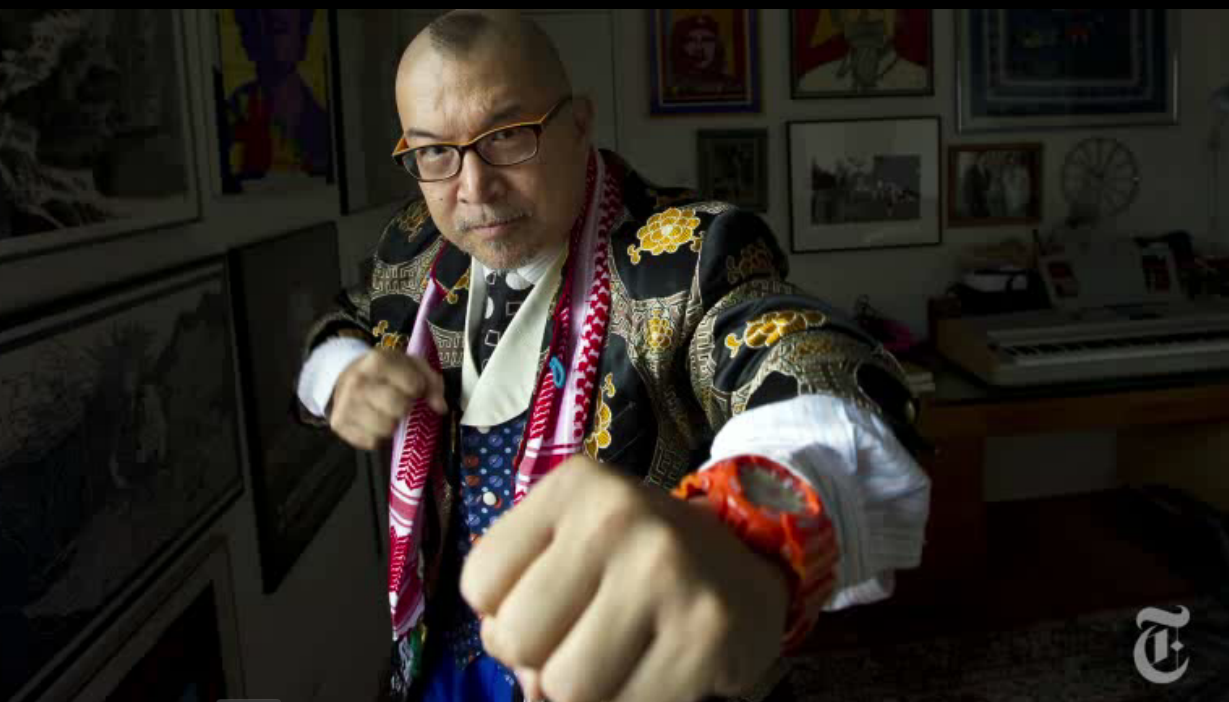
The New York Times published an obituary for the respected, left-wing US jazz artist Fred Ho on April 12, the day he died, by Ben Ratliff. Ratliff did a fine job of recounting Ho's artistic achievements and ambitions as well as his complicated radical politics (he described himself as a “revolutionary matriarchal socialist and aspiring Luddite”).

Fred Ho, 2013. Photo: Fred Bright, for the New York Times

But Ratliff did not mention an aspect of Ho's politics that was apparent from the way he was dressed in the two photos that appeared on the page (one of them from the video on Ho, which is a must watch), which of course struck me. Ho was shown in both wearing a red (red salute!) kufiya scarf. I do not know whether Ho was ever active in, or ever made any statements in support of, Palestinian solidarity activism (he did however make a statement in criticism of John Zorn's "Zionism"). But it seems pretty clear that Ho did have a sentiment of solidarity; it's hardly likely that he wore the scarf simply because it was stylish.

 Screen save from vid (photo, Fred Bright)

"My hope is that my music would inspire revolution." (quote from the video)


Monday, April 07, 2014

REORIENT on Mizrahi music

REORIENT recently published a fine overview of Mizrahi music in Egypt and current efforts to keep the Arab Jewish tradition alive, by Mohamed Belmaaza. He, I think correctly, labels the current generation of cultural activists 'Neo-Arab-Jews,' due to the fact that they have not been educated in standard Arabic, unlike their parents and grandparents who were born in the Arab world.

Belmaaz discusses the fabulous Neta Elkayam, about whom I hope to blog in future, and he cites the work of scholars of Mizrahi music Motti Regev, Edwin Seroussi, and Amy Horowitz. And there is much more.

But the bit that I found most interesting, and the most moving, is the discussion of David Regev Zaarour, grandson of the renowned Iraqi musician Youssef Zaarour. David Regev Zaarour "recently decided to pay tribute to his family by uploading on YouTube all of his grandfather’s recordings. ‘I had to put [the recordings] on YouTube to make [them] memorable. I got reactions and photos from people, especially from Iraq’, he says in a short documentary he created. As well, David also preserves the cultural legacy of his family and his roots by performing Arabic Iraqi and Egyptian music in his band, La Falfoula."

Here is a link to his archive youtube videos, which is quite remarkable. It includes not just music from Youssef Zaarour but by other Iraqi musicians as well. And also some vids of his group La Falfoula. Below is just a sample, but you should explore the entire archive.


Also very noteworthy is the video about David and his grandfather by Jewish Daily Forward. I was particularly moved by the phone call between David and an Iraqi, who pays tribute to the Iraqi Jewish musicians and states that is a national shame that their contribution to the country's is forgotten and not recognized.

Toukadime (all vintage) Radio presents: North African miniskirt music + some mini-jupe vids


The inestimable Toukadime Radio, which stands for tout qadim, that is "all" (in French) "old/vintage" (Arabic), has just made available its latest broadcast, #16. All songs about the 'mini jupe,' French for miniskirt, all from North Africa. Well, all except for two about the 'maxi.' Please listen.

I managed to find some youtube vids of the songs in question. Here's Slimani with "Mini Jupe A Fatima."


Mazouni's "Mini Jupe."


Chab Haj Mohamed Bouzoubaa, "Benate El Mackssi" (and this one is about the "maxi" not the "mini).


If you find any more, let me know!

Thursday, April 03, 2014

Even more mahraganat (electro shaabi) photos


This set from David Degner. And focusing this time on the Tamanya Fil Meya ("Eight Percent") crew from Matariya. (And again, no mention at all of the January 25, 2014 massacre in Matariya. Sheesh.)

In any case, great photos. I particularly love the one above, featuring Oka and Ortega at some kind of (staged?) pink wedding.

Fortress Europe: In last 13 yrs, 23000 people died trying to reach it


This statistic, and this map, from a tweet on April, 2014 by the Migrant Rights Centre.

And more about the phenomenon, the stats, and how they were arrived at here.

Wednesday, April 02, 2014

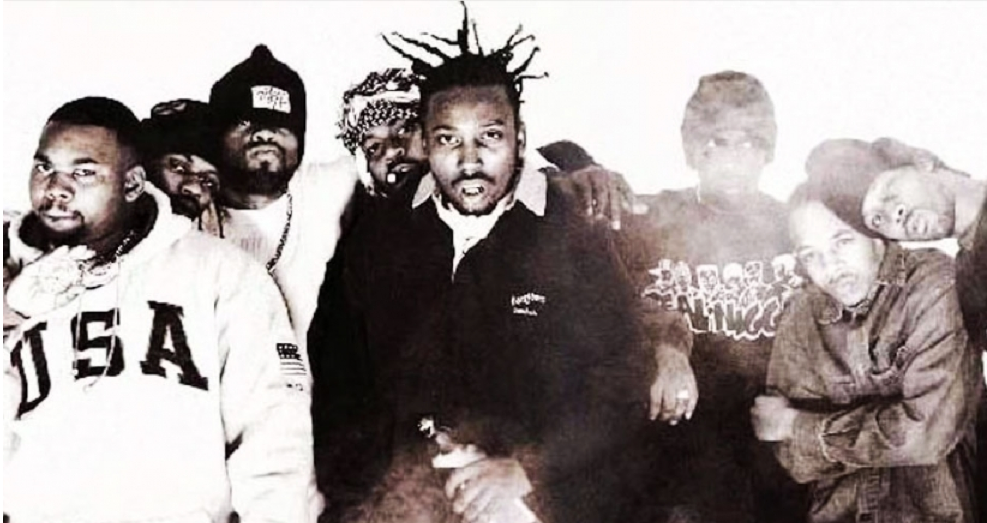
Wu-Tang kufiya


 I recently came across this photo of the Wu-Tang Clan, taken in 1993. I think that is Method Man behind Old Dirty Bastard, wearing a kufiya. I believe it is from a Wu video, but I've not been able to identify it.

Method Man of course recorded a song called "PLO Style" on his 1994 album Tical. It really only gestures to the PLO in a stereotypical way and seems to have nothing to do with solidarity.

The street life is the only life I know
I live by the code style it's mad P.L.O.
Iranian thoughts and cover like an Arabian
Grab a nigga on the spot and put a nine to his cranium


Tuesday, April 01, 2014

Cheikh Hasnaoui, "Bnat essohba" (rumba)

Ya bnat essohba
Ya bnat el ghorba
We-chtih er-rumba
Ihabou lbal
We-chtih er-rumba 
(corrected April 15)

(Filles de compagnie 
Filles de l’exil 
Elles aiment le bal  
Et la danse de la rumba)


A rumba from Cheikh Hasnaoui

Cheikh Hasnaoui, born Mohammed Khelouat (1910-2002). One of Algeria's great chaabi singers, from a small town near Tizi Ouzou in Kabylia. Much of his career was spent in France, from 1938, and he is considered one of the great Algerian singers of the exile experience. He recorded in both Arabic and Berber, and is regarded as both a great master of chaabi and one of the originators of modern Kabyle music.

Claude François twists, in Arabic


In 1962, French pop star Claude François released the single "Le Nabout Twist," in Arabic and in French, under the pseudonym Kôkô. Here's the Arabic version (well, it's not all in Arabic, but a mix of Arabic and French).


Why did this big French star release a song in Arabic? As I have blogged about previously, he was born in Ismailiyya, Egypt, in 1939. His father worked as a shipping controller in the Suez Canal. The family was forced to leave for France in 1956, in the wake of the Tripartite Aggression. Apparently, his departure from Egypt was something he always regretted.

I don't have time to try to translate the Arabic, and am not sure I understand it all in any case. His pronunciation certainly is not perfect, but the sentiment, the gesture, of recording in Arabic, is certainly admirable. Apparently the song didn't do well in France but was well received in "Africa" (at least so say the notes on the youtube vid.) 

You can learn more about Claude from this review of a 2012 French biopic about the star, courtesy Arun Kapil.

I don't know what Le Nabout is. For some reason I think it's the name of a traditional Egyptian dance, but I'm not sure.

Appearing on the same EP was "Ali Baba Twist," a cover of an original by Bob Azzam. I actually prefer this "twist" to "Le Nabout." Check it out

And here's Bob Azzam's version: 


Here is a link to the French version "Le Nabout Twist"

Ecoute-moi mon petit chéri
Si tu veux maigrir il faut danser
Le Nabout... Twist

{Refrain:}
Le Nabout, le Nabout, c'est la danse que vous appelez le twist
Le Nabout, le Nabout, il y a bien longtemps que cela existe
Le Nabout, le Nabout, c'est une question de force abdominale
Le Nabout, le Nabout pour garder la ligne c'est radical

Je ne peux pas dire quand j'ai posé la question
Il n'y a rien de mieux pour la digestion
Après le repas c'est une occasion
De perdre son ventre et pas la télévision

{au Refrain}

Vous allez me dire "c'est américain"
Ne croyez pas ça car il n'en n'est rien
Et vous nous voyez là tout excités
On n'a pas attendu Elvis Presley

Allez allez
Allez allez
Y a pas mieux
Allez allez
Allez allez
Tu viendras mon amie
Allez allez
Allez allez
Et tous deux la nuit
Allez allez
Allez allez
On fera tous les deux twist twist twist
Twist twist twist
Le Nabout
Twistez le Nabout
Le Nabout
Allez twistez tous le Nabout
Le Nabout
Allez on va twister comme des fous
Le Nabout, le Nabout


(plus some mention of hashish)

here>

Monday, March 31, 2014

drone life cont'd: Jon Langford's 'Drone Operator'


 Thanks to Mike W, who informed of this. Jon Langford of The Mekons and the Waco Brothers and lots of other bands, and formerly of Leeds and now very settled in Chicago, has put out a song called "Drone Operator." He seems to have been performing it since at least 2012, but has recently put it out (by Jon Langford and Skull Orchard) as a single, and on youtube, with a very fine video by Hassan Amejal. 


Amejal also sings a bit in Arabic (haven't had the time to decode it, and maybe I won't be able to. Somebody help.)

If you know anything about Langford's politics you'd know that the song would be critical of the drone war machinery. And it is. Here are some of the lyrics:

I’m not really a soldier
I’m more likely to die
By car wreck or cancer than the eye in the sky
That follows them home, right into their window
And they never know
They never know

and...

It didn't look like a wedding
It wasn't my call
When it all was over
We went to a bar
Drank beer and watched basketball


 It's a sinister, and at the same time, banal evil.

"Drone Operator" is on the album Here Be Monsters, which is about to drop, as they say, on April 1, which is only a few hours away. Enjoy.
 

Saturday, March 22, 2014

Mahragan: Excellent photos from Mosa'ab Elshamy

 Sadat and tuk-tuk in Sadat City (Mosa'ab Elshamy)

Mosa'ab Elshamy is one of the best, maybe the best, photographers in Egypt to emerge into global fame since the events at Tahrir in January-February 2011. Rolling Stone magazine has just published a set of his photos on Egypt's mahragan (AKA electro-shaabi) scene, and they are stunning. (There is text as well, unattributed.)

Mahragan in Rolling Stone? Yep, the genre is getting a level of international reputation and cred that is remarkable. It's a testimony both to the creativity and quality of the music as well as the interest that the so-called Arab Spring and its culture spawned in the West. 

I'm not sure I like this description of the phenom: "the country's underground electro-rap uprising." Why "uprising"? Was rap, which Rolling Stone compares it to, an "uprising"? What did it overthrow? This issue, moreover, begs the question, not addressed in the text that accompanies the photos -- what is the relation between mahragan and politics in Egypt today, ever since Rabaa massacre of August 2013, the crackdown on the Muslim Brotherhood, the military coup, and the emergence of the Sisi phenomenon? What about the fact that, on the third anniversary of the launch of the January 25 (political) uprising, 21 people protestors were killed in al-Matariya, one of the strongholds of mahragan, the popular quarter of the Eight Percent crew (Wizza, Ortega and Oka)? 

Really, you'd think that at least some readers of the mag would want to know...

One more quibble: I keep insisting that the genre should be called mahragan (sing.) not mahraganat (plural). Someone please tell me why I'm wrong.

In any case, the photos are great, take a look. 

And you can see more of Mosa'ab Elshamy's photos on flickr, and follow him on twitter via @mosaaberizing.

Friday, March 21, 2014

The film "Traitors": women, punk, Morocco


Traitors (dir. Sean Gullette) has been on the festival circuit for a couple years. It looks, based on the reviews and the available trailers, to be a good one. I was alerted to it by Joobin Bekhrad's review in REORIENT, which also features one of the trailers. The latter features the lead, Malika, and her all-female Moroccan punk band doing a version of The Clash's "I'm So Bored with the USA," in Arabic, but with the chorus, "I'm so bored with Mo-ro-cco" sung in English.

Among other things, Bekhrad writes, "Gullette’s film appears to be one centred around the power and allure of rock music, particularly in a North African context; however, as it progresses, it also comes to provide a powerful social commentary on the current generation of Morocco’s youth and their hopes, aspirations, frustrations, dilemmas, and anxieties, evoking at times a mood similar to that prevalent in earlier films such as Fatih Akin’s Head On..." If it's anything like Head On I it should be worth watching. We can only hope.

(I liked Bekhrad's review but it was marred by a move that everyone writing in English about Middle Eastern pop music seems to make, which is "clever" puns. A couple examples: "stuck between Maroc and a hard place" and "Maroc and roll, baby." Er, enough.)

Here's another clip from the film:


And some more info:

"Features original songs sung by its riveting star Chaimae Ben Acha [who plays Malika, the leader of a Tangier punk band], and new music from much-hyped all-female bands Savages and Talk Normal." (I've not been able to find any of their music, however.)

Here's an interview with the director, published in Variety. Where we learn, among other things, that the film was funded with a grant from the Sharjah Art Foundation.

And, a review in The Hollywood Reporter, quite positive.


Sasha, the Belgian Malinois, in kufiya

Thanks to my friend SL, who came across this photo via the Facebook group Everything Belgian Malinois.

The photo is of Sasha, taken just a couple days before she passed away, at 3 1/4 years, due to spinal cord injury and impending kidney failure. Isn't she a beauty? RIP.


Wednesday, March 19, 2014

New collection of Algerian music from Sublime Frequencies

I'm very excited that Sublime Frequencies is coming out with a new volume of Algerian popular music. Their last one, 1970's Algerian Proto-Rai Underground, was essential, and revelatory. The new one, out in May, is called 1970s Algerian Folk & Pop. The publicity for the album describes its range thus: "From the heavier rock and psychedelic sounds of Rachid & Fethi, Les Djinns and Les Abranis, to the haunting folk music of Kri Kri and Djamel Allem and the film soundtrack moods of Ahmed Malek..." The tracks were selected by Hicham Chadly, so you know they're good even before you give a listen. You can go to the website of the distributor, Forced Exposure, to listen to samples from all the tracks.


Several of the tracks on the album can be found with a bit of searching. The great track by Rachid & Fathi, "Habit En-Aïch," can be found here


Berber singer Idir's song, "A Vava Inouva," is quite well known. Jane Goodman discusses it at length in her essential book, Berber Culture on the World Stage.

 
Here is Kri Kri's "Wahdi." 


"Chenar le blues" from Les Abranis 


Smail Chaoui's "N'sani N'sani" (it's the second song on this Youtube vid) 
 
 
Djamel Allem, "Ourestrou" 
 
The rest? We'll just have to wait til the album comes out.
 

Monday, March 17, 2014

Recommended Mix: by Ayshay (Fatima Al Qadiri)


You may recall that I was not too hot on Fatima Al Qadiri's Desert Strike album from 2012. But this mix from two years ago, which she recorded under the name Ayshay ('anything' or 'whatever' in Arabic), is really terrific. A must listen. Do it now. And if you go to Fatima's webpage, you can download the mix. As well as other cool stuff.

Kufiya, International Women's Day

My friend Allen shot me this photo. It was taken at Qalandiya refugee camp, in the West Bank, on International Women's Day, March 8, 2014. Love it. If it's not obvious, the women are throwing stones at Israeli soldiers.


turbanophobia


I've reported on occasion about the bohemian hipness of turbans in the US. Notable why? Because it seems to fly in the face of endemic Islamophobia.

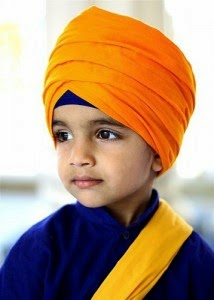
So maybe we on the progressive front should be doing more to promote turban wearing, in solidarity with Sikh children, who, it turns out, are the massive target of bullying in US schools. (Wearing a turban would be much more radical than sporting a kufiya scarf, eh?)

As reported by Jezebel:

"A recent survey by the Sikh Coalition has found that half of Sikh children and two-thirds of Sikh children who wear their hair in turbans report being bullied at school" (emphasis added).

Where is the anti-bullying lobby on this issue?!

The report goes on to argue that this is a wider phenomenon, due largely to the post 9/11 terror hyper-hysteria:

"The period since 9/11 has been particularly difficult for Sikh Americans and their children. While Sikh children experience bullying in the classrooms, their Sikh American parents endure astoundingly high rates of hate crimes, employment discrimination, and scrutiny at the nation's airports. Brown skin and turbans have popularly become associated with terror. Crude popular culture stereotypes of terrorists and damaging media images outside the class room have made their way into the classroom to the detriment of young Sikhs."

And, whenever instances of mass shootings are discussed in the context of the need for control, why in the hell is Oak Creek, Wisconsin almost never mentioned? It was here, on August 5, 2012, that a white supremacist killed six Sikhs and wounded four others, at a Sikh Temple.

Oak Creek, Oak Creek, Oak Creek. We remember Columbine, Aurora, Newton...Why not Oak Creek?

Oh, I guess the Sikh Coalition report begins to suggest why. Many of us do not believe turban wearers are "innocent" or even "American."


Tuesday, March 04, 2014

Documentary on the "absorption of immigrants"


This is an eye-popping 2011 account from Israel's channel 2 of a 1951 documentary found in the Israeli army archives, about Israel's "absorption of immigrants." It is as racist and Orientalist and patronizing as can be, all about how Ashkenazi Jews are bringing the dark and savage Oriental Jews (from Yemen) into civilization and the light. Biting commentary by Yehouda Shenhav of Tel Aviv University, an Iraqi Jew.

A note on the youtube post provides this information, from Jacob Gross, about Saadia, the Yemeni "star":

Zacharia Shalom, son of Hasan and Nur (who played Saadia) was born on April 5th, 1937 in the city of Al Bida, Yemen. Died on the second day of the six-day war, June 6th, 1967, Leaving behind wife, daughter and son.