From Michel Launay's great book,
Paysans Algériens: La Terre, La Vigne et Les Homme (Paris: Éditions du Seuil, 1963). He is describing what he considers the negative effects of what he calls "double culture" (French, Algerian) on the small group of educated in the arrondissement of Aïn Témouchent, in the late fifties and early sixties. He writes, on p. 381:
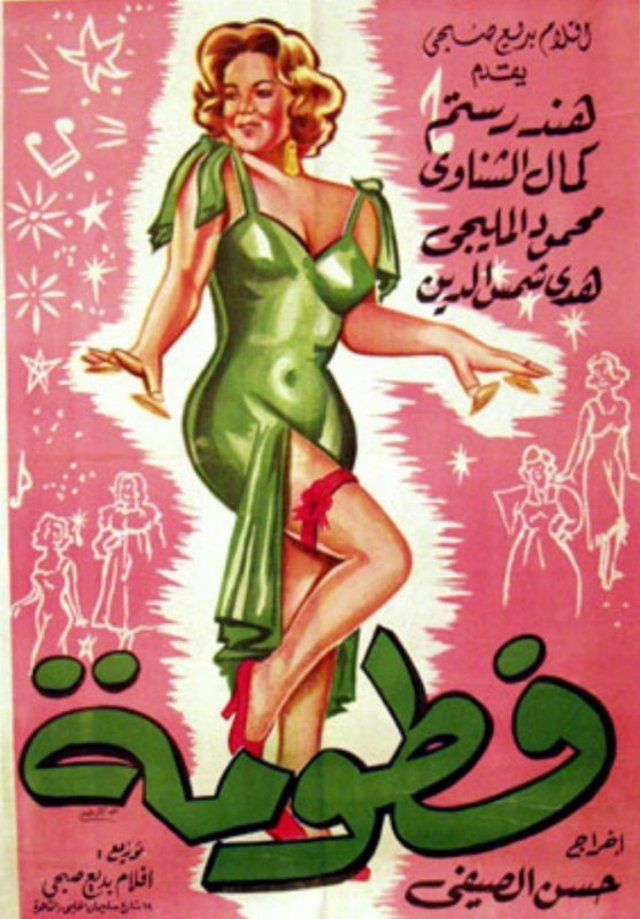
J'ai écouté, pendant l'été 1962, de navrantes conversations, où des titulaires du B.E.P.C. [Brevet d'Études du Premier Cycle], instructeurs scolaires ou autres petits fonctionnaires des villages, trahissaient inconsciemment leur egoïsme et leur futilité. L'exemple de leurs dirigeants qui s'entre-déchiraient n'était qu'une excuse: s'ils critiquaient alors l'A.L.N. [Armée de Libération Nationale], c'était non pas parce qu'elle avait déçu le peuple, ce qui était le cas, mais parce qu'elle interdisait les surprise-parties et les boissons alcoolisées. Pour d'autres «intellectuels» du même type, mais amoureux du Caire, la culture arabe es symbolisée par les disques et les films de cet «Hollywood d'Orient». La chanson Mustapha en synthétise l'ineptie.
To summarize, these "intellectuals" were characterized by egoism and shallowness, they were critical of the Algerian liberation movement because it forbade "surprise parties" and alcohol, they were enamored of the music and cinema of Cairo, and, what summed up their absurd position was: "Mustapha."
Here is Bob Azzam's famous and much beloved song (also known as "Ya Mustapha"). Notice how it modulates between Western and Oriental modes (more than 30 years before Khaled's "Didi," which does the same thing).
And here's an article on the song, and Azzam, from
Time magazine. Note all the punning. (Such punning was revived in media coverage of the world music phenomenon in the 1980s, and it continues til today.)
Most Happy Fellah
Time, Monday, May 30, 1960
"It has a wiggly-hipped, exotic beat that sounds part Latino, part Arab.
When the song is played at Geneva's tonier-than-thou Chez Maxim's,
aging bankers and their young girl friends go into curious convulsions
on the dance floor; at least one U.N. functionary has been known to
snatch up a tablecloth, wrap it around his waist and do a belly dance.
In Paris the tune tumbles endlessly from Left Bank students' rooms;
chefs abandon soufflés to hear it. From Stockholm to Sorrento,
Bandleader Bob Azzam's Mustapha has spread like a rampaging fungus, is
the biggest European juke and nightclub tune since Volare.
Tomato Sauce. Like 37-year-old Azzam himself—who was born in Cairo,
lives in Geneva, drives a Chevrolet station wagon and speaks five
languages—the song is a hybrid, Eurafrican polyglot. Written in French,
Italian and Arabic, its lyrics may have been found in a Babel café:
Chérie, je t'aime, Chérie, je t'adore,
Como la salsa del pommodore.
Ya Mustapha, ya Mustapha
Ya baheback, ya Mustapha.
Sabaa senine fel Attarine,
Delwati guina Chez Maxim's . . .
All this is, more or less, the story of a fellah who once lived in the Cairo slum of Attarine [sic: Attarine is in Alexandria, not Cairo, and is more middle class than slum]
, is now at Chez Maxim's (where Bandleader Azzam himself hit the big
time), and adores his girl "like tomato sauce" (salsa del pommodore in
Azzam's pidgin Italian). But the words do not matter. They merely
complement the international melody, which tinkles like goat bells near
the White Nile and clicks like the heels of an Andalusian gypsy. Scored
by Azzam for bongos, flute, tambourine, echo chamber and his own voice,
Mustapha is adapted from an Egyptian student song, but owes much of its
popularity to electricity. When he plays the song at nightclub
engagements or recording sessions, onetime Electrician Azzam surrounds
himself on the bandstand with an impressive bank of hi-fi equipment,
places a microphone before each member of his five-man combo, whirls
dials feverishly to doctor their output as it blends in the echo
chamber, before a final electric impulse sends it shivering through the
audience.
Fox-Oriental. Bob Azzam learned his electronics in the British Royal
Navy, set up his own business after World War II, may have been
discouraged by the outcome of his biggest contract, the complete wiring
job for a pair of 200-room palaces belonging to Saudi Arabia's Premier
Feisal. Azzam worked for a year, putting in everything from air
conditioning to electric-eye doors, but had trouble collecting bills and
ended up without a profit. Turning to music, he organized a combo and
began picking up engagements around the Levant, hit it biggest in
Lebanon with his "slow rocks," "fox rocks" and boleros.
The band caught the last ship when the Lebanese civil war broke in 1958.
In less than two years, Azzam & Co. had driven the Continent wild
on Mustapha's "fox-oriental" mixture. From then on, every thing was pure
tomato sauce."
Bob Azzam was a Christian, born in Egypt to Lebanese parents in 1925, died in Monaco in 2004. He enjoyed a long career in Europe and the Mediterranean more broadly. He's a kind of Egyptian version of Charles Aznavour or Tino Rossi, or maybe the best analogy is Dalida.
Here's an account of the song, which seems not to have originated with Azzam, although he did copyright it and make it huge. And the
wikipedia take.
Here is a post on Azzam by a Swede, Matts Werner, who was friends with Azzam. (Use google translate, if you don't know Swedish. Azzam was a hit in Sweden too.)
Some claim that this guy, the Turkish-Jewish singer Dario Moreno, did the original, but who knows. In any case, this version is a great deal of fun. I love it when it shifts into big-band gear.
Azzam did two other well-known songs with a strong Middle East flavor, "
Ali Baba Twist," and "
Fais Moi Le Couscous." ("
Habibi Rock" and "
Shish Kebab" are great fun too.)
At the time of nationalist struggles, the kind of cosmopolitan culture that "Mustapha" represented was very much frowned upon by nationalist militants, with whom Launay is in sympathy. Now we tend to look upon it with more favor, and sympathy.