Friday, April 26, 2013
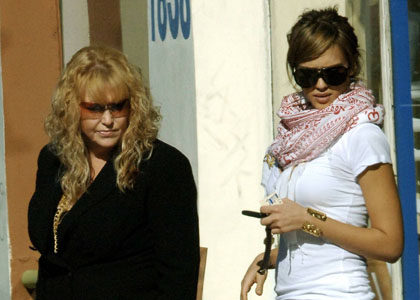
Badu, Badu
Do you think Erykah is wearing a pink kufiya in this photo, used to announce The Beat Tape Vol. 2 from her project The Cannabinoids? Which, by the way, you really should grab and listen to. Try Vol. 1 too.


Sunday, April 21, 2013
Dabke: Sounds of the Syrian Houran, from Sham Palace
This release from the label Sham Palace is terrific. (I say that based on listening to the samples: haven't yet purchased it. But I aim to soon.)

Here is how the label describes it:
Dabke is the celebratory music and dance found throughout the Levantine Middle East. By the mid-1990s, a new wave of high-energy electronic dabke music had emerged -- to be heard at weddings, parties and cassette-stalls region-wide. New wave dabke was first introduced to Western ears by way of Omar Souleyman and his northeastern Syrian sounds. This collection presents a hypnotic and diverse selection of electrified dabke dance cuts from a region in the south of Syria known as the Houran. The Houran refers to a swathe of south Syria and northwestern Jordan, beginning just below Damascus, and encompassing the Syrian cities of Daraa, Suweida, Bosra and the Golan Heights. Its populations include Syrians, Bedouin, Druze, Palestinians and Jordanians -- and this unique confluence of cultures is evident throughout these tracks. Hourani dabke is relentless and commanding, driven by heavy rhythms and weaving synthesizers. Long passages of intense musical fervor are punctuated by fierce male vocals, belting out calls for the audience to dance, alongside the lyrical laments and tributes to love and lust. But the sound of the Houran is best defined by the mijwiz -- a double-reed bamboo flute famed for its droney overtones as well as shrill, buzzing melodic lines achieved by circular breathing techniques. Historically, Hourani dabke was played with mejwiz, hand percussion and narrative vocal chants. Electronic beats have inevitably embellished the contemporary sound, magnifying the intensity -- and the mijwiz players have taken their craft to the microphone, in order to maintain the instrument's prominence over the resulting volume. The sampled mijwiz sound has its own specific qualities and in recent years, can even be heard in combination with its organic counterpart. The recordings featured in this collection were captured live to the mixing desk during weddings and parties throughout the Houran during the 1990s and 2000s, and represent a mere sliver of the sounds found in tape and disc vendors throughout the region. Proceeds from this release will be donated to the Syrian Arab Red Crescent (IFRC) to help support urgent humanitarian aid work during the ongoing crisis in Syria.
Order it here. If you're in doubt, you can listen first.
Pitchfork reviewed it here. Robert Christgau here.
Lebanese rapper El Rass الرأس
When I was in Beirut last month the hip-hop heads I met there were touting Lebanese rapper El Rass as one of the most impressive of the current crop. Rima Marrouch did a nice piece on him for the LA Times on March 30. Here are some excerpts:

"His forte is the way that he is able to incorporate an understanding of nuance of language perhaps better than anybody," says Jackson Allers, founder of the U.S.-based Beats and Breath blog. El Rass, wrote Allers in the World Hip Hop Market website, "has emerged as a lyrical soothsayer for a new school of Arab hip-hop."
El Rass' signature style is an animated fusion of classical Arabic — an idiom seldom employed in rap — and contemporary wordplay gleaned from the Lebanese streets and elsewhere...
From his viewpoint, there is a kind of continuum of language and purpose from early Koranic verse to today's Arab-language MCs. The Arabic word taaliq (a commentary), he notes, has the same root as the word muallaqat, which refers to the first pre-Islamic poems.
"Arabs first wrote poetry, not prose[...][Reciting] the Koran is also close to what we do" as rappers.
...One of his favorite singers is Abida Parveen, a Pakistani singer well know for her interpretations of Sufi poetry.
...He is an equal-opportunity critic, lashing out at the Muslim Brotherhood, radical Islamists, Iran, Turkey, Gulf "tyrants," the United States and various Lebanese figures and mores, among other targets. Playing the part of disgruntled contrarian seems to suit him.
...His debut CD, "Kachf el Mahjoub/Unveiling the Hidden" (the title is from a Sufi master-work penned some 900 years ago), recorded with avant-garde musician Jawad Nawfal (a.k.a. Munma) was released last year on Ruptured, a Beirut-based independent record label. El Rass is working on tracks for a second album.
"My Arabic identity is a digital bedouism," he writes. "No nationalism, no nostalgia, only passion for creating our new identity. This is how I understand our revolution."
You can listen to El Rass here, on Soundcloud.
Do give a listen.
Here are some reviews of El Rass's first album.
Revolutionary Arab Rap provides a translation of the lyrics of El Rass' song, "The Volcano of Beirut," here.
Wednesday, April 17, 2013
Rachid Taha's new one
Rachid Taha has a new album out, called Zoom. It's available in Europe, but not issued yet in the US. Not even on iTunes or emusic. Damn. Based on this track, it promises to be a good one. (I wasn't so taken with Taha's last outing, Bonjour.)
The song is a basic blues, and the basic lyric goes, "I don't have a passport, I don't have a visa, I have nothing baby." The typical lament of the undocumented migrant. Love it.
The song is a basic blues, and the basic lyric goes, "I don't have a passport, I don't have a visa, I have nothing baby." The typical lament of the undocumented migrant. Love it.
new one from Ramallah rapper boikutt
Palestinian rapper Boikutt (ex-Ramallah Underground, currently a member of Tashweesh and also a solo artist) contributes a terrific vocal on the Beatoven track "Falstaf," from the album Tangled (to be released on the 7th of May - or is it the 5th of July?).
Monday, April 15, 2013
would supporters of Pussy Riot care about Al Haqed, Oday Khatib, Weld El 15?
Last August I posted a complaint about the vast discrepancy in Western media coverage and popular and celebrity solidarity between the case of Pussy Riot and that of Al Haqed. I've been ranting about the cases below on Facebook. A friend said I should consider asking the legions of Pussy Riot supporters and admirers to pay attention to these cases rather than mocking them for not doing so. So that's what I'm doing: Please, lovers of Pussy Riot (and I include myself in that camp), note these cases and publicize them, if you love music and the freedom of expression.
1. The Moroccan rapper Al Haqed (Mouad Belghouat) was released from prison on March 29, after serving a year's sentence for insulting a public official in his video, "Dogs of the State."
Predictably, not much publicity in the Western media. At least this from Huffington Post.
2. Sandy Tolan has been blogging about the 22 year-old Palestinian singer Oday Khatib, who has been arrested and charged with throwing stones, which could send him to prison for up to 10 years. According to Tolan the evidence is ambiguous. Read about the case here. (The trial keeps getting postponed: the scheduled date is now April 17.) Nicola Perugini also reported on Oday for the LRB Blog.

Check out Oday's singing, backed by Ramzi Aburedwan.
3. Amira Masrour reported on tunisia live that Tunisian actress Sabrine Klibi and cameraman Mohamed Hedi Belgueyed were sentenced on March 21 to six months in prison for defaming police officers and contributing to civil disobedience, through their role in the video "Cops Are Dogs" (Boulicia Kleb) by rapper Weld El 15 (Ala Yaakoubi). Weld El 15, who is on the run, was sentenced to two years in absentia. HipHopDX reports that Tunisian rapper Emino, who was thanked in the credits section at the end of the music video, also received a two year sentence. He's on the run too.
According to, Weld El 15, Masrour reports, the song was inspired by his prison experiences after the 2011 revolution and the treatment he received at the hands of the police. “‘Cops are Dogs’ is a song based on metaphors with which I wanted to
send a message to policemen,” Yaakoubi said. “I wanted them to respect
people so that people respect them.”
How about some solidarity from Ice Cube, a member of NWA? NWA's classic song "Fuck the Police" was massively condemned,
and even prompted a letter of complaint to NWA's label, Priority, from the FBI director of public affairs. Cops throughout the country refused to provide
security at many of NWA's concerts.
Or from Ice-T, whose group Body Count released the song "Cop Killer" in 1992. The song inspired so much outrage, ranging from President George Bush the First to various law enforcement agencies, that Ice-T felt compelled to recall the Body Count album and re-release it without "Cop Killer."
Both the Ice-T and the NWA cop songs are way, way more incendiary than Weld El 15's.
Where's the solidarity, folks?
Sheikh Jarrah and the Right of Return
“By insisting on a Jewish right of return to Sheikh Jarrah, Israel is
opening the 1948 file and strengthening the Palestinian claim of a right
of return to Israel.” Great piece by Sarah Wilman from the New Yorker blog.


Monday, April 08, 2013
RIP Annette Funicello, ska artist
She recorded "Jamaican Ska" on her 1964 album, Annette at Bikini Beach.
Here she is on TV, doing it with Bob Hope (!).
She reprised it in the 1987 film, Back to the Beach, with Fishbone (!).
I prefer the first, the more innocent, version.
Here she is on TV, doing it with Bob Hope (!).
She reprised it in the 1987 film, Back to the Beach, with Fishbone (!).
I prefer the first, the more innocent, version.
Saturday, April 06, 2013
alienation of young adult American Jews from Israel
"a mounting body of evidence has pointed to a growing distancing from Israel of American Jews, and the distancing seems to be most pronounced among younger Jews."
BEYOND DISTANCING: Young Adult American Jews and Their Alienation from Israel, by Steven M. Cohen (Hebrew Union College – Jewish Institute of Religion) and Ari Y. Kelman (University of California, Davis).
Download here.
Thursday, April 04, 2013
drone life
Adam Harvey's fashion solution to targeted killings:

"the collection includes hoodies, hijabs, and burqas made with metallized fibers that reflect heat, thus evading the thermal imaging technology used by drones. The garments were created in collaboration with fashion designer Johanna Bloomfield and highlight Harvey's own anti-authoritarian leanings and qualms about the unbridled use of drones."

"the collection includes hoodies, hijabs, and burqas made with metallized fibers that reflect heat, thus evading the thermal imaging technology used by drones. The garments were created in collaboration with fashion designer Johanna Bloomfield and highlight Harvey's own anti-authoritarian leanings and qualms about the unbridled use of drones."
Tuesday, March 26, 2013

Sunday, March 24, 2013
Beirut Blues

the ruptured sessions vol. 5 CD release party, a photo by tsweden on Flickr.
I arrived in Beirut on March 15. It's now the 24th, and I'm about to leave.
I didn't get to see any live music but I did meet some cool people with connections to the music scene, and I learned a fair about.
1. I missed both performances that Ziad Nawfal was involved in, including the one above. But I did get hold of most editions of the Ruptured Sessions. Check out the Ruptured website -- Ruptured has produced a number of recordings, they put on radio shows and concerts. It's an important hub of music activity in Beirut.

2. I met DJ Sotosura my first night here, chatted with him a bit, and got my hands on his brand new mixtape, Al 3arabi Mo5. You can listen to it here. Very cool session, with def artists like boikutt (Palestine), Deeb (Egypt), El Rass (Lebanon), and El Far3i (Jordan). One of the very encouraging things I learned is how much collaboration is going on between rappers from these and other Arab countries. The rap scene is bringing back a kind of cultural pan-Arabism.
3. As far as Lebanese rappers, Sotosura (who is Palestinian) particularly recommend El Rass. And I highly recommend him to you.

5. I met Jackson Allers, who has been in Beirut for the last six years, and has been actively following and involved in the Beirut (and Arab more generally) music scene, and especially the rap scene. He's working on a book about Arab rap, which I look forward to eagerly. Meanwhile you can follow him on his blog Beats and Breath -- Iqaa3 wa Nafas. Essential reading.
And Jackson recently took over as managing editor of World Hip Hop Market, also a great website, dealing with global rap, but really, not from the point of the view of the capitalist market. At least not big capitalist.

Check out, for instance, his interview with Syrian-American producer dub Snakkr, producer of another pan-Arab collection of hip-hop, called Khat Thaleth (Third Rail). It's a great collection too, and you can find it on iTunes and emusic and all over. Go get it. (I blogged about it earlier: you can get a promo with 7 of the 23 tracks here.)
----
It was great to get a bit of an introduction to the scene in just a few days, even if I didn't actually get to see any live music. But I did collect a packet of CD's. And ma'leesh, I'll be back inshallah.
Tuesday, March 19, 2013
more kufiyas from Kanye and Hova
I never got around to posting about Jay Z & Kanye West's "No Church in the Wild" video from May 2012.
It is full of kufiyas. The video is all street confrontations between police and a mixed-race, all-male bunch who look like (or are made to look like) anarchists. Since it's from corporate rappers, I think it's all about a commercialized exploitation of the energies of Occupy Wall Street and street battles in London. And aestheticizing the hell out of it, while at the same time trying to show just a little bit of sympathy for the rioters who get beat up by the cops. I don't know whether I'll have the energy to spend much more time thinking about it. Here are some kufiya shots. The vid is below.


It is full of kufiyas. The video is all street confrontations between police and a mixed-race, all-male bunch who look like (or are made to look like) anarchists. Since it's from corporate rappers, I think it's all about a commercialized exploitation of the energies of Occupy Wall Street and street battles in London. And aestheticizing the hell out of it, while at the same time trying to show just a little bit of sympathy for the rioters who get beat up by the cops. I don't know whether I'll have the energy to spend much more time thinking about it. Here are some kufiya shots. The vid is below.


Relative calm هدوء نسبي

This song, the title track to Ziad al Rahbani's 1985 album, Houdou Nisbi (relative calm), speaks to the situation in Lebanon right now. Deadly civil war right next door in Syria. Hundreds of thousands of Syrian refugees in the country. Sectarian strife threatening to spill across the border into Lebanon. Etc.
The album simply brilliant, and it at times reminds me of Serge Gainsbourg. I picked it up at the Virgin Megastore on Hamra St., Beirut, yesterday.
And isn't the cover brilliant?
Sunday, March 17, 2013
kufiyaspotting
kufiya on the cover of Charlie Ahearn's "Wild Style The Sampler"
Note added April 19:
From the same era, here's one of Afrika Bambaataa in kufiya.
And Madonna, using it as a scarf. Madonna, for the record, was part of the general scene. Both she and Bam played at the Roxy in New York City around the same era.

You also wonder whether this guy on the cover of Ahearn's book wasn't channeling the Attica prison uprising of September 1971.
Madrid demonstrators, Wednesday March 13, 2013
on the plane from Paris to Beirut on March 15, I got the IHT and spotted this. I'll be talking about kufiyas at AUB on Thursday.

Monday, March 11, 2013

Friday, March 08, 2013
Malik, gone for 6 months

It's been six months to the day since our beloved animal companion Malik passed away. He was a big dog, weighed nearly 100 lbs., probably a Catahoula-Great Dane mix. But who knows, he was picked up on the street by our neighbor, abandoned as a small puppy along with his sister near the Veterans Hospital in Fayetteville. Probably he was abandoned by a breeder, due to the fact that he had a deformed iris, which meant that his right eye had a bit of trouble with bright sunlight.
Malik means "king" in Arabic. He was no royalty as a puppy, he chewed on everything, was unbelievably rambunctious and energetic. Over the 11 and three-quarters years that he lived with us, we must have walked nearly 10,000 miles. When he grew up, however, he came to project an aura of dignity, and so came to grow into his name. He was a trooper right til the end, still full of life and full of joy, eager to walk. Except he really couldn't, his back legs were giving out, probably due to pressure on his spine and nerves, from the large fatty tumor that grew on his back over the last year of his life. At least three vets who I consulted told me it was inoperable, so there wasn't much we could do.
Malik went with me to Georgetown University when I spent the year there as a visiting professor from August 2011-May 2012. He was such a fabulous companion, and he loved our daily walks in DC, along Rock Creek, in Georgetown, along the Potomac. I will treasure that memory forever.
Miss ya, buddy. You were the best.
misc. kufiyas: Paul Robeson in "Jericho" (1937) (+ Princess Kouka)

Robeson as Jericho, Princess Kouka as Gara

I've not yet seen it, a friend (Bob) just recommended it to me. It is supposed to be one of Robeson's best film roles. He plays a US GI who gets court-martialed, ends up in North Africa, hooks up with the Touareg, marries into the tribe, marries a Touareg woman, and becomes their leader. And leads them to victory. Can't wait to see it, it's coming soon via Netflix. Bob says that the exteriors were shot in Cairo and that the crew was there a month and that Robeson was looking forward to making another movie with Umm Kalthoum.
Meanwhile, Princess Kouka, pictured above, is a well-known Egyptian actress, born Tahia Ibrahim Bilal. Among other things, she appears in the wonderful 1955 film A Cigarette and a Glass (Sigara wa Ka's), starring Samia Gamal and Dalida. Kouka plays Azza. You can rent it from Netflix, and I highly recommend that you do so.
Here's a scene for the film. Kouka sings the title song while holding, yes, a cigarette and a glass. And Samia Gamal dances. Of course it's sublime.
Dalida also has a great, sultry singing scene in the film.
Subscribe to:
Posts (Atom)