Thursday, March 09, 2006

Vera Tamari at The Bridge, NYC


Since I know Vera Tamari and admire her work, which is being exhibited at The Bridge in NYC at the Palestinian art exhibit (see below), I thought I'd post a photo of what she's showing. The work is called Tale of a Tree (ceramics and phototransfer on plexiglass.) And here is a description, from the exhibit website:

Vera Tamari's iconic installation refers to the hundreds of olive trees that have been destroyed. Not only an essential food staple, the olive is also a medicine, a cosmetic, and a symbol for the attachment of Palestinians to the land. The wanton destruction of hundreds of these ancient trees by settlers and military forces is one of the many great tragedies of the occupation of Palestine.

“Vera Tamari pays tribute to the olive trees, a persistent theme in her work, now a dreamy vision in myriad shades of pastel blue, pink, purple and ochre yellow: The olive tree, green and solid, giving birth to coloured miniatures in itself, tired of its ancient form and of its constant symbol, breaks norms and transcends tradition, bursting into a dazzling rainbow for the future." – Tania Tamari Nasir (March 2000)


Tags: , ,

Exhibition of Contemporary Palestinian Art in NYC


MADE IN PALESTINE, which is (apparently) the first exhibition of contemporary Palestinian art in the US, opens in New York City from March 14-April 22, 2006. It features such well-known Palestinian artists as Taysir Barakat, Suleiman Mansour, Vera Tamari and Emily Jacir. Check out the website here, it has short bios on the artists, examples of the artwork, and much more.

The exhibit is at The Bridge, 521 W. 26th St., 3rd Floor. The opening features artists Samia Halaby and Zuhdi al-Adawi plus music, food and wine.

I hope the curators have invited New York Senator Hilary Clinton to the opening.

Tags: ,

Monday, March 06, 2006

SPIN on French rappers and 2005 riots


Marisa Meltzer & Julianne Shepherd have an article in the latest issue (March) of Spin dealing with French rap and the 2005 riots. (Sorry, it's not available on-line.)

They make the point (which hawblawg made earlier here and here) that "French rappers had been vocal about the banlieues for years." The first to "potently address the problems in the banlieues," was the group Suprême NTM. (See Paul Silverstein and Chantal Tetreault's article in Middle East Report Online, "Urban Violence in France," which opens with some potent NTM lyrics.)

Besides making that rather (to me) obvious observation, the article does an overview of the history and present of French rap that I found useful because I've gotten quite out of touch with the scene. Here are some of the main points:

1. France is the second-largest of consumer of hip-hop in the world, after the US. Hip-hop style is arguably as ubiquitous in France as it is in the US. As in the US, the culture of the youth of the social and economic margins has conquered the cultural "center."

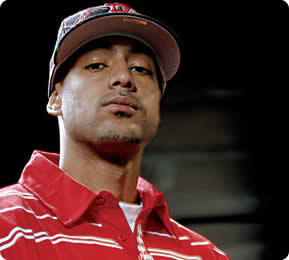
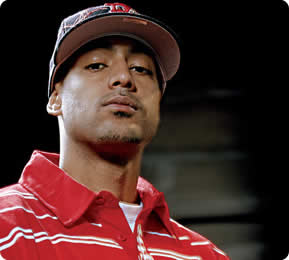
2. Lyrics are given the most weight in French rap. (That is, they are privileged over beats or flow or sound of the mix.) According to Meltzer & Shepherd, this puts them in the tradition of Edith Piaf, Serge Gainsbourg and Charles Aznavour. French intellectual supporters in particular are prone to making such claims, as for instance critic Thomas Ravier, writing in the literary magazine La Nouvelle Revue Française, who compared rapper Booba (pictured above) with Céline and Proust. (Such pronouncements have been common ever since rap appeared on the French scene in the late '80s; see the article I co-authored with Joan Gross & David McMurray, "Arab Noise and Ramadan Nights: Rai, Rap and Franco-Maghrebi Identities" in Lavie & Swedenburg, Displacement, Diaspora and Geographies of Identity, for some examples [p. 144, p. 154 f.n. 44].)

3. In the French census, immigrants and anyone under 18 born to immigrant parents is counted as a "foreigner." Hence the anti-foreigner rhetoric that was so prevalent from the French media during the October riots. (If I'm not mistaken, the children of immigrants can choose to take French citizenship at age 18.)

4. French rappers to listen for (besides the old school of NTM, IAM, Arsenik, Fonky Family, Saïan Super Crew, and Ministère A.M.E.R.) are:

"Maintstream heavy hitters" Rohff, Sinik
"Street favorites" Booba, Disiz la Peste, Tandem
"Unmitigated pop acts" K-Maro (a Lebanese Canadian often compared to MC Hammer & Will Smith)

Others mentioned include TTC, Tandem, and La Rumeur.

5. Given the relative absence of ethnic minorities in the government or the media, and the lack of any strong locally-based leadership, the only real "public" representatives of the youth of the banlieues are the rappers.

In sum: the problems of racialized minority youth in the banlieues are awful. Rappers who vocalize these problems are huge in the domain of French pop culture. No effective political force exists to mobilize around the issues of the banlieues, and so, rappers are the only effective voices.

One important issue that the article fails to address adequately is the strong Arab and Muslim (Arab and African) character of the banlieues. Chill, also known as Akhenaton, one of the two lead vocalists in IAM, is quoted several times, but never identified as a Muslim (the son of Italian immigrants, he is a convert.)

The article appears in the wake of a recent book review in The Nation by the inciteful critic Greg Tate. In his review of three new volumes on hip-hop, plus one on the Black Arts Movement, Tate assesses the demise of hip-hop's political promise, its rapid move from "folk culture to commercial subculture to global youth culture to global capitalist marketing tool." What once was "considered mad-scary, dangerous and actionable by Congress and national law-enforcement agencies, has turned to dust--or, more accurately, the fool's gold of nouveau bling fortunes."

Tate goes on, "What's often forgotten is that hip-hop used the evil empire of the industry to further its own ends--subverting the mechanisms and formulas of pop to forge platinum hits with litte or no airplay, music video or promotion...But hip-hop also paid a price for the ticket of inclusion. By making a devil's bargain with hyper-capitalism, hip-hop lost not only its freedom of speech but its powers of speech..."

And, "Most of the hip-hop audience barely (if ever) experienced it as a radicalizing political force, and for new listeners it's merely another Internet menu item."

What I think Tate partially misses is that our political hopes (in the days when "conscious" rap acts like Public Enemy and KRS One were pre-eminent) for hip-hop were not realized because, like in France, rap artists vocalized sentiments in the absence of effective voices from grass-roots political leaders. Hip-hop, I believe, can be a powerful ally or energizer of progressive political movements, but when artists are the only voice, or the loudest voice...turning to dust, or fool's gold, is a likely outcome.

Tags: ,

Saturday, March 04, 2006

Morrissey Quizzed by FBI and British Intelligence


Morrissey (as you all know, the former lead singer of the Smiths, a solo artist since 1987), reports that he has been interviewed by both the FBI and British intelligence over his opposition to the war in Iraq. Morrissey has called Bush a "terrorist." Says Morrissey about the role of music and politics:
I don't belong to any political groups, I don't really say anything unless I'm asked directly and I don't even demonstrate in public. I always assume that so-called authoritarian figures just assume that pop/rock music is slightly insane and an untouchable platform for the working classes to stand up and say something noticeable.

Let's see, if we add Morrissey to the artists listed below, who are performing at the anti-war benefit at the Hammersmith, what do we notice?

Famously gender-ambiguous: Morrissey, Michael Stipe, Devendra Banhart, and Fischerspooner.

Queer as you can possibly get: Peaches.

And Conor Oberst of Bright Eyes looks somewhat metrosexual to me.

Leaving Loudon Wainwright III and Steve Earle as the only unambiguously hetero anti-war msucians on the bill. Except that Loudon's son Rufus Wainwright is gay...

Tags: ,

Friday, March 03, 2006

Me & Peaches


Yes, I know, this is an example of shameless self-promotion and star worship. This is me with Peaches, backstage at the Young Avenue Deli in Memphis, November 2003.

Tags:

"Bring 'Em Home Now!" Concert for Peace on March 20 in NYC


This is an amazing lineup: Michael Stipe, Rufus Wainwright, Bright Eyes, Fischerspooner, Peaches, Devendra Banhart, & Steve Earle, with special guests "Peace Mom" Cindy Sheehan & Chuck D.

At the Hammerstein Ballroom to commemorate the Third Anniversary of the Invasion of Iraq.

Proceeds will be donated to Veterans for Peace and Iraq Veterans Against the War.

A LIMITED BLOCK OF ADVANCE TICKETS AVAILABLE AT 10% DISCOUNT at Ticketmaster.com or by calling (212) 307-7171. Use code "PEACENOW".

Tickets are priced at $28, $35 and $150 VIP (including Meet & Greet with Cindy Sheehan and Peaches, open vodka bar and reserved balcony seating).

Doors open at 7pm, show at 8pm.

Two of my all-time favorite artists, Peaches and Steve Earle. I really wish I could make it to the VIP lounge to drink vodka with Cindy and Peaches. I'm also very fond of Fischerspooner, although their second album was a disappointment compared to the amazing first release.

I will be giving a paper about Peaches (who I've met a couple times) at the annual meetings of the Canadian Anthropological Society (CASCA) in Montreal, on May 10. The title is "'Back It Up, Baby': Peaches Queers Straight Sex." I reviewed a 2001 Steve Earle concert in Fayetteville for PopMatters that you can read here. As for Bright Eyes, you can read about his blast against Bush on the Tonight Show here.

Tags: ,

NYC: Free the P Hip-Hop & Slam Party, March 16


This is from Electronic Intifada (Thanks, Laurie.)

NAAP-NY in conjunction with the N.O.M.A.D.S. & the Philistines present...

Free the P Hip-Hop Slam & Party

Proceeds will benefit NAAP-NY community initiatives and Slingshot Hip-Hop, a documentary film that focuses on the daily life of Palestinian rappers living in Gaza, the West Bank and inside Israel. It aims to spotlight alternative voices of resistance within the Palestinian struggle and explore the role their music plays within their social, political and personal lives.

WHEN: Thursday, March 16, 2005. Doors open 9pm. Show starts 9:30pm

WHERE: Coda Lounge, 34 E. 34th St. (at Madison Ave), New York City.

COVER: $15. Limited at the door. Purchase your tickets NOW at http://www.freethep.com/concert.htm

Opening Performance by comedienne Maysoon Zayid.

Feature Performers include: *Ragtop of the Philistines & The N.O.M.A.D.S. and many more!!*

DJ Jungle
spinning the hottest Hip-Hop, International, and Arabic beats all night long!

Tags: ,

Monday, February 27, 2006

More "Cairo Station"


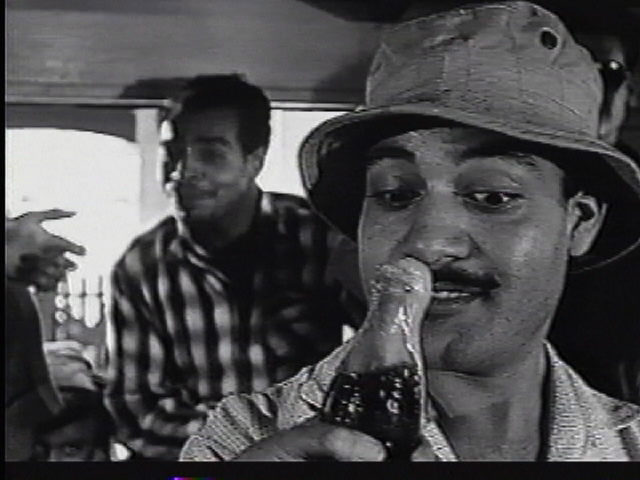
Here's a still from a scene I focused on when I talked about Chahine's Cairo Station on Friday: a passenger in the car where the rock'n'roll band is playing, enjoying a Coke that Hanouma has just given him.

Tags:

Youssef Chahine at Tennessee Tech


I'm just back from a trip to Tennessee Tech in Cookville, TN, along with Joel Gordon (History, University of Arkansas) and Elliott Colla (Comparative Literature, Brown University). (That's the two of them posing on a locomotive at the Cookville Station museum.) We screened Youssef Chahine's 1958 masterpiece, Bab el-Hadid (Cairo Station) on Thursday night and answered questions afterwards. On Friday, the three of us each made short presentations on the film. We've submitted a panel proposal to MESA based on our Tennessee Tech presentations, and hopefully it will be accepted.

Tags:

Sunday, February 19, 2006

Kufiyaspotting #9A: Prefuse 73 -- and starving the Palestinians


From Ben Ratliff's "Playlist" column in today's NYT, a review of producer Guillermo Scott Heren, who records as Prefuse 73, and his new release Security Screenings.

I really like what I've heard of Prefuse 73, although I've not heard the new album. And I like the political sympathies of G. Scott Heren, which can be gauged in this interview with Pitchfork. But today, because the enormity of what is facing the Palestinians seems even more grim, I'm feeling that such kufiya style gestures are pretty insignificant. Of course, what should I expect one, single, solitary producer of music to do?

Here's what's bugging me: Israel is going to do its best to cut off funding to the Palestinian authority, in order to try to "starve" Hamas--which now controls the Parliament--into submission. Today the Israeli government announced it will stop turning over the tax receipts it collects on behalf of the Palestinian authority, amounting to $50 million a month.

Dov Weissglass, advisor to Acting Prime Minister Olmert, explained the Israeli government's logic as follows: "It's like a meeting with a dietitian. We need to make the Palestinians lose weight, but not to starve to death (my italics)."

Bravo to Weisglass for striking a blow against obesity. Those Palestinians have gotten way too fat!

Or have they? The New York Times reported on January 17, "According to recent assessments by the World Bank and the UN Development Program, up to 60 percent of Palestinians now live under the poverty line, which suggests that even those who are employed are barely subsisting."

The UN's Food and Agriculture Organization (FAO) reported, in its 2006 Humanitarian Appeal, that, "For the fourth consecutive year humanitarian agencies are appealing to donors for funding for the West Bank and Gaza Strip. "The labour market is characterized by informal, short-term and low-paid work. Poverty has climbed to 64 percent and unemployment is at 27 percent, almost three times as high as in 2000. The situation is particularly grave in the Gaza Strip, where almost all areas are experiencing high levels of food insecurity."

UNICEF reports (2006): "Malnutrition for children [in Gaza] under the age of five (U5) remains high at 10% and the risk of malnutrition for the very young children is increasing. The most vulnerable age group are children aged 12-23 months with stunting reaching 16%.

"Chronic macro- and micronutrient malnutrition in children under five has continuously increased. One in ten children under five are chronically malnourished (stunted), meaning that about 50,000 children will not reach the standards for growth and development. The heaviest burden is carried out by the children 12-23 months (almost 16% of them are stunted), a critical age when the biological and developmental future of the child is at stake. The malnutrition rathttp://www.blogger.com/img/gl.link.gifes in Gaza Strip, in all urban areas, as well as in girls, are above average levels.

"The micronutrient malnutrition - iron, vitamin A and iodine deficiencies - are affecting around 40% of children U5. These issues are directly related to the household impoverishment and degradation of coping strategies, as well as of practices of breastfeeding and young child feeding."

Clearly, these kids need the help of the "dietitian."

(The last two kufiyaspottings are here and here.)

Tags:

Saturday, February 18, 2006

Bellydancing: Shakira


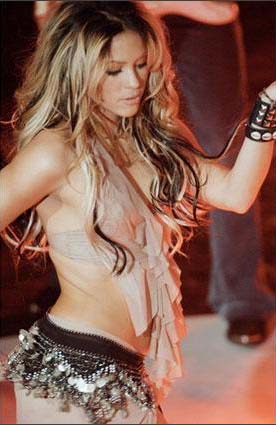
Back to the frivolous, and acknowledging another bellydancer: Shakira Mebarak, who goes simply by Shakira. Colombian superstar whose father is Lebanese. She definitely has bellydance moves. I know of only one song where she sings a verse in Arabic: "Ojos Asì," off the album, Dónde Están los Ladrones? It's also the only song of hers I know that has any Arab flavor. But at least the bellydancing moves, which Shakira employs frequently, always do.

Tags: ,

Friday, February 17, 2006

Hijabspotting: Cat Power


I frequently kufiyaspot on this blog, but rarely bother with the hijab, or alternately, veil, or alternately, Islamic dress. Hijabs are just too obvious, for the most part, whereas kufiyas, much more subtle. (Not of course if worn over the head, but as a scarf, yes.)

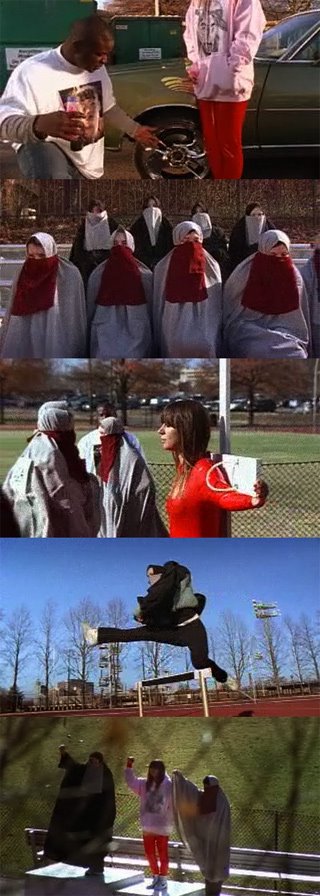
But here's a case where the symbolic usage of the hijab is pretty inscrutable, and more interesting to discuss. It's from a video for Cat Power's song "Living Proof," off her new, widely hailed album The Greatest, recorded in Memphis.

As Kelefa Sanneh notes, the Cat Power vid opens with what appears to be a tribute to a video by Mafia rappers Three 6 Mafia video that features group members drinking coffee syrup out of baby bottles. Chan Marshall (who records as Cat Power) is wearing a 2Pac hoody and drinking cough syrup out of a baby bottle together with a black man. (Cough syrup is the preferred intoxicant of the great rappers in Houston who produce a southern brand of hip-hop known as "screw.") But the more remarkable feature of the video is this. Chan Marshall takes off her hoody and puts a large white cross over her back, and, dressed in a red catsuit, races around a track with several women dressed in the kind of veils and Islamic dress typically worn in Iran. (The outfits look a bit sloppily conceived, not exactly what women wear in Iran.) Chan comes in second. She and the veiled first and third place medalists raise clenched fists, evoking the black power salutes of Tommie Smith and John Carlos at the 1968 Olympics in Mexico City.

I have no idea how to read this vid. Is the cross carried by Chan/Cat supposed to represent a burden, the analog of the religious burden of the Islamic dress worn by the other runners? Is Chan/Cat's red catsuit also supposed to represent a burden, the female burden of "looking good for men"? One of the veiled women is shown jumping over a hurdle in the course of the footrace. Does this suggest that Islamic dress is not a burden for women, since it doesn't hinder them from participating in athletic activity? Do the clenched fists a moment of female solidarity, transcending religious divisions? And why is Chan/Cat drinking cough syrup with her black companion/boyfriend?

I have no idea what the answers are, but I love the questions the video raises...

,

Even more queer cowboy...

Here are three verses from "Cowboys Are Frequently Secretly (Fond of Each Other)" that don't show up on Willie Nelson's version of the song (see below) but are on Pansy Division's. I don't think Willie was editing, he just couldn't fit all the verses into a 3:33 song. Pansy Division is a punk band and storms through the verses much more quickly.

Ten men for each woman was the rule way back when on the prairie,
And somehow those cowboys must have kept themselves warm late at night.
Cowboys are famous for getting riled up about fairies,
But I'll tell you the reason a big strong man gets so uptight.

Cowboys are frequently secretly fond of each other
That's why they wear leather, and Levi's and belts buckled tight.
There's many a cowboy who don't understand the way that he feels towards his brother,
There's many a cowboy who's more like a lady at night.

Cowboys are frequently secretly fond of each other,
Even though they take speed and drive pickups and shoot their big guns;
There's many a cowboy who don't understand the way that he feels towards his brother,
There's many a cowboy who keeps quiet about things he's done.

Tags: , , ,

Wednesday, February 15, 2006

More Queer Cowboys from Willie


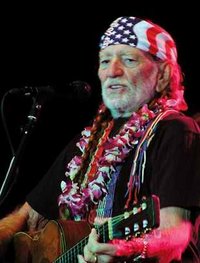
Willie Nelson has recorded a wonderful new song called “Cowboys Are Secretly, Frequently (Fond Of Each Other).” It was debuted on Howard Stern's morning Sirius Radio program yesterday, Valentine's Day. Listen to it here, or buy it from iTunes.

The song was written by Ned Sublette, author of the essential, and critically hailed, Cuba and Its Music: From the First Drums to the Mambo. Ned Sublette, like Buddy Holly, Butch Hancock, Jimmie Dale Gilmore and Joe Ely, hails originally from that crucible of US popular music, Lubbock, Texas.

According to an article in the Dallas Morning News, Willie was inspired to record the song after his friend and tour manager of thirty years, David Nelson, told him that he was gay. The Morning News also reports that this is the first time a major country artist has recorded a "gay-themed" song. "Before that," the article goes on, "the closest is Garth Brooks' 1992 single 'We Shall be Free,' a cry for peace and equality with the pro-gay line 'When we're free to love anyone we choose.' Though it didn't focus exclusively on gays, the tune stirred some controversy; some radio stations across the country wouldn't play it. We Shall be Free' peaked at No. 12 on Billboard's country singles chart, ending a string of Top 10 hits for Mr. Brooks."

The song was earlier recorded by the queercore band Pansy Division, and appears on their 1995 album, Pile Up. I'm not sure that the lyrics are exactly the same on the Pansy Division and the Willie versions. [Correction: I've checked more carefully--see above.]

But here are a couple good lines, on both versions:

"Well, a cowboy may brag about things that he does with his women,
But the ones who brag loudest are the ones that are most likely queer."

And,

"Well there's always somebody who says what the others just whisper,
And mostly that someone's the first one to get shot down dead"

My cowboy hat is off to Willie!

Tags: , , ,

Saturday, February 11, 2006

Academic Discussion of Israel Boycott? Not OK!

It was announced Thursday that an AAUP-sponsored conference on academic boycotts, scheduled to be held in Bellagio, Italy, on February 13-17, would be "indefinitely postponed." According to Haaretz, it was the successful pressure of US Jewish groups, including the ADL (Anti-Defamation League) and American Jewish Conference, that led to the "postponement."

Here's how Abraham Foxman, National Director of the ADL justifies his organization's opposition:

"We were troubled to learn that eight of the 21 participants in this conference support the use of boycotts against the state of Israel...We support academic freedom, but one needs to proceed with caution when the views being included are far outside of the mainstream, or when the message involves anti-Semitism, Holocaust denial, or questions Israel's right to exist."

The eight pro-boycott academics in question are:

Omar Barghouti, Tel Aviv University
Yehudith Harel, Tel Aviv University
Rema Hammami, Birzeit University (Palestine)
Lisa Taraki, Birzeit University (Palestine)
Sondra Hale, University of California, Los Angeles
Shireen Hassim, University of Witwatersrand (South Africa)
Hilary Rose, City University (London)
Ur Schlonsky, University of Geneva

I know Rema Hammami, an anthropologist who did her Ph.D. at Temple University, and Lisa Taraki, a sociologist, and I've met Sondra Hale. At least three of the eight are Jewish, and two teach in Israel. It is typical of the defamation that ADL routinely circulates that the eight are smeared with accusations of anti-Semitism, Holocaust denial, and denial of Israel's right to exist. Not a shred of evidence is adduced, and I strongly doubt that any exists.

There was, however, a cock-up in the organization of the conference. According to the AAUP,"due to an egregious error, we had included in the pre-conference packet a deeply offensive article by a Holocaust denier. The article had been collected during our research for the conference, but it was never intended for distribution to the participants or, indeed, to anyone else. We notified all the participants in the conference at once of this blunder and that the article had been pulled."

Haaretz claims that the article was passed out (it's not clear how or to whom); according to the AAUP, the article was pulled and never intended for distribution.

The AAUP, having acknowledged its mistake, intended to proceed with the conference, but according to the ADL statement, Ford, Rockefeller, and Nathan Brown did not agree. Apparently this is what caused the "postponement."

AAUP attempted to organize a conference to discuss the question of academic boycotts. AAUP is on record as being against such boycotts. The discussion at Bellagio in no way would have resulted in any change in its policy or any other group's policy regarding boycott, it would have simply been an airing of differences. The AAUP mistakenly put in an inappropriate article that had nothing to do with its own positions or the political positions of the participants. The AAUP caught its own error and apologized. The ADL and like-minded Jewish groups apply pressure and--a predictable denouement.

The affair is entirely representative of the skittishness and lack of courage prevalent in the US academy, when it comes to even discussing applying pressure to Israel for its occupation policies in the West Bank and Gaza. (We will get to celebrate the 39th anniversary of the Occupation this June.)

The US Presbyterian Church, which voted in June 2004 to divest from companies doing business with or in Israel, is so much more courageous than the US academy.

Tags: ,

Friday, February 10, 2006

Architects and Planners for Justice in Palestine Threatens Israel Boycott


An article in today's The Independent reports: "A group including some of Britain's most prominent architects is considering calling for an economic boycott of Israel's construction industry in protest at the building of Israeli settlements and the separation barrier in the Occupied Territories."

Israeli architect Eyal Weizman, director of the Center for Research Architecture at Goldsmith's College, London, agreed: "A boycott would be totally legitimate...The wall and the settlements have been deemed illegal by the International Court of Justice and we should boycott any company which does business, any architects that participate - anyone facilitating these human rights violations and war crimes."

Weizman was featured in an excellent New York Times article ( Jan. 1, '06) on the debate over the role of Israeli architects in the building of the apartheid wall.

Charles Jencks, a member of Architects and Planners for Justice in Palestine, is one of Britain's leading landscape architects. He is the author, among other books, of The Language of Post-Modern Architecture (1977), often credited with having popularized the term, post-modernism. Jencks is quoted by The Independent as saying: "There reaches a certain point where an architect can't sit on the fence. Not to stand up to it would be to be complicit."

Jencks described what the Independent politely calls the "separation barrier" as "a contorted, crazy, mad, divisive, drunken thing".

Jenckes went on: "In 10 years' time its builders will see it as a great folly... Architecturally it is madness. I understand fully that security is the problem for Israel and they have the right to protect themselves. But this is not the solution...It is an extremist measure which forments extremism, by incarcerating and intimidating Palestinians." Jencks "called for architects to gradually increase pressure on Israeli."

(Chalk up one for post-modernist theorists.)

Tags: , ,

AFSC Nominates Jeff Halper, Ghassan Andoni for Nobel Peace Prize


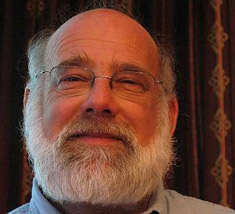
The American Friends Service Committee announced on February 3 that it had nominated Ghassan Andoni and Jeff Halper for the Nobel Peace Prize. Andoni is a Palestinian, a Professor of Physics at Birzeit University, well known for co-founding the Palestinian Center for Rapprochement between People and the International Solidarity Movement (ISM). Jeff Halper (pictured) is Israeli, Professor of Anthropology at Ben Gurion University, and co-founder of the Israeli Committee Against House Demolition (ICAHD), which is exemplary among Israeli peace groups for its activism on the ground in the West Bank and Gaza Strip. (I can't find a good photo of Andoni.)

As an aside, because I'm particularly interested in this, Halper was a pioneering scholar in the field of Mizrahi, or "Israeli Mediterranean," music (the music of Jews of "Eastern," mostly Arab, origin). Here are a couple references:

Jeff Halper, Edwin Seroussi, and Pamela Squires-Kidron, "Musica Mizrahit and the Realignment of Israeli Society: The Case of Hayyim Moshe." 1789-1989 Musique, Historie, Democratie, 3 vols., ed. Antoine Hennion. Paris 1992, vol. III, pp. 669-672.

Jeff Halper, Edwin Seroussi, and Pamela Squires-Kidron. "Musica Mizrahit: Ethnicity and Class Culture in Israel." Popular Music 8/2 (1989), 131-141.

Tags: , ,

Church of England Votes to Divest from Caterpillar


War on Want reports: "The General Synod of the Church of England voted yesterday evening (6 February 2006) 'to disinvest from companies profiting from the illegal occupation, such as Caterpillar Inc, until they change their policies'...Caterpillar has been singled out by the United Nations for complicity in human rights abuses in the Occupied Palestinian Territories. Thousands of Palestinian homes and vast swathes of agricultural land have been destroyed by the Israeli military using armoured Caterpillar D9 bulldozers." In addition, it was an IDF Caterpillar that killed Rachel Corrie on March 13, 2003.

Read about War on Want's Caterpillar campaign here.

Tags: , , ,

Wednesday, February 08, 2006

10,000+ Mobile Homes Stockpiled in Hope, AR


I can't believe the national media has not picked up on this one yet: Arkansas Congressman Mike Ross has written three letters to FEMA's interim director since December asking why 10,000 plus mobile homes are being stockpiled at the Hope, Arkansas airport (pictured above.) FEMA hasn't yet answered his letters, although a FEMA employee recently contacted Ross's office to say they are fixin' to.

This news comes as FEMA is starting to stop paying for hotel rooms for Katrina victims who have not found housing.

Says Ross, “This is the craziest thing I’ve ever heard in all my life, and it makes me angry — angry as a taxpayer and angry for the victims of Hurricane Katrina...There’s no reason why FEMA — after five months — should not have been able to build some manufactured-housing parks.”

This was published in today's Arkansas Democrat-Gazette, but the article--unbelievably--is available by subscription only.

Tags: , ,

Monday, February 06, 2006

'Ud Spotting: Fannypack, "So Stylistic"


The first 15 seconds of the Brooklyn girlgroup Fannypack's "So Stylistic" (title track from their 2003 Tommy Boy release) is a sample of an 'ud solo. Seven seconds of just 'ud and derbouka, and then joined by Fannypack's characteristic, retro, early '80s electrobeat. I have no clue as to the provenance of this sample, but it is great. Cut'n'mix the 'ud everywhere, I say.

But why the 'ud, in Fannypack's delicious, carefully crafted, and eminently fun, old school sound? Is it just a bit of exotica? A random, weird sample, meant to trick the listener into thinking the song is heading somewhere else? Or does it reflect the fact that the 'ud is to be heard all over Brooklyn--in all those great Arab shops on Atlantic Avenue as well as in Rashid's Music Sales, which opened on Atlantic in 1947 and relocated to 155 Court St. in the late nineties?

The answer is, probably all, or none of the above. (Thanks to Steven Shaviro for turning me on to Fannypack.)

(And by the way, weren't fannypacks one of the most unattractive inventions of the late '80s? I'm so glad they've vanished from the scene.)

Tags: ,