Sunday, December 31, 2023

#kufiyaspotting: John Lennon, Bermuda, 1980

October 7 and its aftermath have produced multiple kufiya spottings, and a fair bit of news coverage. I've been too overwhelmed by the events to get on the blog to write about it. I will try to make more of an effort in future, but all I can promise is dribs and drabs. This represents some housekeeping, in fact, a photo that has been on my hard drive for some time but never managed to post.

John Lennon spent some time in Bermuda in 1980. A friend sent me this photo, found on reddit. The description says only this: "new release photo, on deck, Bermuda June 1980." Do we presume then that John was on some yacht, and needed to cover himself from the sun, or protect himself from the wind. And why did he use a kufiya? Kufiyas were starting to become somewhat common street wear in US urban areas by the early eighties, as I've written about elsewhere, so I guess it was simply something he came across in New York City, where he lived. That's all I've got! Check out the photo: 


Tuesday, November 28, 2023

My book chapter, "The Kufiya" (2021) available here as a pdf

 My book chapter, "The Kufiya," published in  Asef Bayat and Linda Herrera, Global Middle East: Into the Twenty-First Century, University of California Press, 2021, is now available here, as a pdf.

Note that there is even a kufiya on the cover of the book! (On the shoulders of Edward Said, from a mural.)

 Note too that if you search this blog there is lots of kufiya/kaffiyeh/keffiyeh content.


My kufiya article from 1992: "Seeing Double: Palestinian/American Histories of the Kufiya"

 My 1992 article, “Seeing Double: Palestinian-American Histories of the Kufiya,” published in Michigan Quarterly Review 31(4): 557-577, can now be found here, as a pdf. It also appeared in the Michigan Quarterly Review's 60th anniversary issue--60(1): 341-362 in 2021.


Sunday, July 09, 2023

Cheikha Rimitti Scopitone!


Watch it here.

 This is courtesy the FaceBook page (which I hope you can access) of the Archives Numérique du Cinéma Algérien, who say about it:

"Alors voici un document extrêmement rare et inédit sur internet: il s'agit d'un large extrait d'un scopitone de Cheikha Remitti tourné très probablement au début des années 1970 et dans lequel elle interprète le morceau "Aïn Kahla".
Nous sommes très heureux de partager avec vous ce document qui nous parait tout à fait exceptionnel.
Si vous reconnaissez le lieu de tournage n'hésitez pas à nous l'indiquer. S'agit-il de l'ouest algérien, d'un village du nord marocain, difficile à dire...
 
MAJ 22h08 : le film aurait été tourné à Debdou à l'est du Maroc, un grand merci à Nehams Ta pour la recherche
🙏
Un grand merci à la cinémathèque de Saint-Etienne de nous avoir permis de numériser ce scopitone au format super 8mm issu de notre collection."
 
For those of you who don't know French, the key points: it's an extract of a Cheikh Remitti scopitone, probably shot in the beginning of the 1970s, a segment of her song "Aïn Kahla." Filmed in the town of Debdou in eastern Morocco. (My guess is that the Algerian government would not have allowed, or made it very difficult, to film a Scopitone there.)

Wednesday, June 14, 2023

RIP Otis Grand


RIP my old pal Otis Grand (on left), who passed away on June 7in London. Me in the middle, on vocals, on the right, Walid Boustany. We got our start playing 'unplugged,' in 1973. then got a full, electrified group going called Bliss Street Blues Band. On harmonica, George Bisharat, AKA Big Harp George. Bass: Todd/Craig Lichtenwalner. Drums, Raja Kawar.

Then we dispersed, Otis ended up in London, eventually started his own band, and was such a prodigious talent that he was voted 'Best UK Blues Guitarist' seven years running (1990–1996) by the British Blues Connection magazine. (After 7 years, his name was retired.) He issued lots of recordings, they are easy to track down. I'll have more to say about Otis in future.

Thursday, March 30, 2023

Graham Nash, "Oh! Camil (The Winter Soldier)"


This is an amazing song (found on Nash's 1973 album, Wild Tales) that I only just learned about, thanks to a brilliant book I recently finished, We Gotta Get Out of This Place: The Soundtrack of the Vietnam War, by Doug Bradley & Craig Werner. Graham Nash actually attended the Winter Soldier Investigation organized by the Vietnam Veterans against the War (VVAW) in Jan-Feb 1971, where he witnessed this testimony from Scott Camil: "I was a sergeant attached to Charley 1/1...My testimony involves burning of villages with civilians in them, the cutting off of ears, cutting off of heads, torturing of prisoners, calling of artillery on villages for games, corpsmen killing wounded prisoners, napalm dropped on villages, women being raped, women and children being massacred." 

 If you've not seen the Winter Soldier movie, you must, it is essential. Check it out here.

Friday, February 10, 2023

Forthcoming book chapter: Rai, World Music, and Islam

Very honored to have been asked to contribute to this great volume, to be published, inshallah, in October. Look for it! My chapter is entitled: "Rai, World Music, and Islam." More details here.


Wednesday, October 12, 2022

Qussay Samak on Naguib Mahfouz in Merip Reports: "a competent novelist of the Cairene petit-bourgeoisie"


 I love this assessment, from the Egyptian leftist Qussay Samak's article "The Politics of Egyptian Cinema," in Merip Reports No. 56 (April 1977). Get it via JSTOR here.

Monday, August 29, 2022

Shows I've seen: Grateful Dead, Sly & the Family Stone, Creedence, Steppenwolf, Iron Butterfly, at The Spectrum, Philadelphia, December 6 1968


 I attended Swarthmore College in 1968-69 and tried to get into Philly as often as the budget and time would allow to see shows. The Spectrum was a big arena with a revolving stage (!). Weird, but at least it gave us a chance to see these bands, and at affordable prices.

The order for this event was: Credence, The Dead, Iron Butterfly, Sly and Steppenwolf. My memory is that Sly put on the most exciting show. I think for me the attractions were The Dead and Steppenwolf ('Born to Be Wild' was a great hit of summer '68). The Dead were not playing in there proper element, and of course their set was way shorter than the usual. (Alas, this was the only time I ever saw the Dead, or any of the others for that matter.) Iron Butterfly of course we all scorned and thought were way overblown. I guess Steppenwolf was good but I have no memory of them. Nor of Creedence, who were known at the time chiefly for their single, "Suzie Q." They may have played "Proud Mary," which was released shortly after the concert.

Here's a review of the concert, from the Wilmington Delaware Morning News, on Dec. 9. There is much to comment on about the review, but let's just say that where I agree with it is (1) The Dead were not impressive (2) the sound was shitty and (3) Sly & Co. were terrific.

Friday, June 17, 2022

Soviet Aswan Dam poster


"Aswan Dam. We are loyal to our friends and always help them in a brotherly unmercenary way." Soviet poster, 1970s. Source here.

The effect of the Aswan Dam on Nubians, one elderly Nubian told me in the late 90s: "Have you heard of the atom bomb dropped on Hiroshima? The Aswan Dam was our Hiroshima bomb."

Tuesday, June 14, 2022

Chile kufiyas, the estallido social (social explosion) of 2019


From the New Yorker, June 13, 2022, an article on Chile's new leftist president, Gabriel Boric. Read it here.

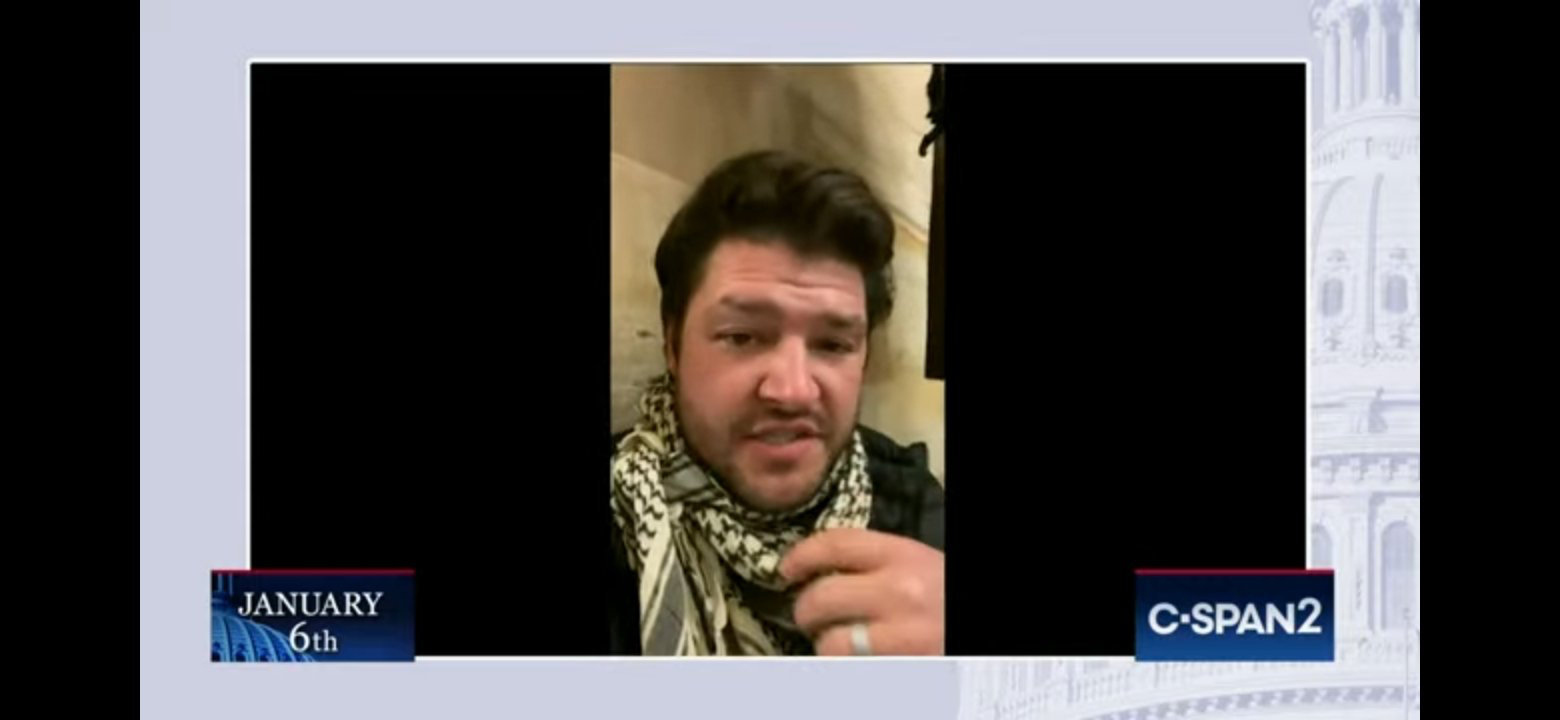
January 6 kufiya

 The last video shown yesterday (June 13) at the House January 6 hearings featured several insurrectionists explaining that they were present at the Capitol that day because Trump had called them to it. I think this is the last of the insurrectionists interviewed. I noticed that he was wearing a kufiya, but didn't manage to get my camera out in time to take a picture. Luckily my very alert friend Tim did, and he sent this photo to me.


Saturday, June 11, 2022

kufiyas and tarbushes in the 1936-39 revolt

 I've written rather extensively about the push by the Palestinian rebels to impose kufiyas on Palestinian males at the height of the 1936-39 revolt, in fall 1938. And I just came across another story about those events, courtesy Zeina Ghandour's A Discourse on Domination in Mandate Palestine: Imperialism, Property and Insurgency (Routledge 2010). This is from her interview with Said Hassan Me'ary, originally from the village of Sha'b, in the Acre district, found on page 113.


Aswan: Krushchev visits Egypt

I very much like this photo of a Nubian (I presume) kid looking at the photo welcoming USSR Premier Nikita Krushchev on his May, 1964 visit to Egypt. (I apologize for not keeping a record of where I grabbed this from.) I visited Aswan with my family that same year, in November. Here's a photo.


Kufiya skirt (via YOOX)


 I checked YOOX, 8PM, Midiskirts online just now, and this item no longer seems to be available.

As is often the case, someone sent this to me (thanks, can't remember who did!), and it took some time for me to get around to posting.

Friday, May 20, 2022

In Berlin these days, the police seem to regard the kufiya as a sign of anti-Semitism

 In Berlin the popo are keeping a close watch on kufiya wearers. 

The kufiya, they seem to have determined, is a sign of anti-Semitism.

(posted May 20, 2022)


Tuesday, March 22, 2022

kufiyaspotting: water protectors (courtesy indiaz.com)


From 2016, but still relevant. Thanks to E for this. Here's the story: 

The #NoDAPL movement is doing more than bringing people from all walks of life together, it's helping to usher in new ones. Independent journalist Mary Annette Pember reports on the birth of the first baby at the water protector camps in North Dakota:

For Zintkala Mahpiya Wi Blackowl, Sky Bird Woman, the birth of her baby girl at one of the water protector camps in North Dakota was the ultimate act of resistance.

Baby, as yet unnamed, was born early in the morning in a tipi on October 12 directly into her mother’s arms as their family slept nearby. The family’s tipi is pitched alongside the Cannonball River.

Baby is healthy and thriving. Blackowl plans to take her to Indian Health Service this week for a well-baby check-up.

“I birthed her by myself,” said Blackowl, of the Sicangu and Ihanktonwan Lakota tribes.

Although her husband and family were sleeping in the same tipi, the birth was a private event. In the traditional Lakota way, the mother gives birth alone.

“That space in which we give birth is so holy,” she said. “At one time our people realized that.”

The source is here.