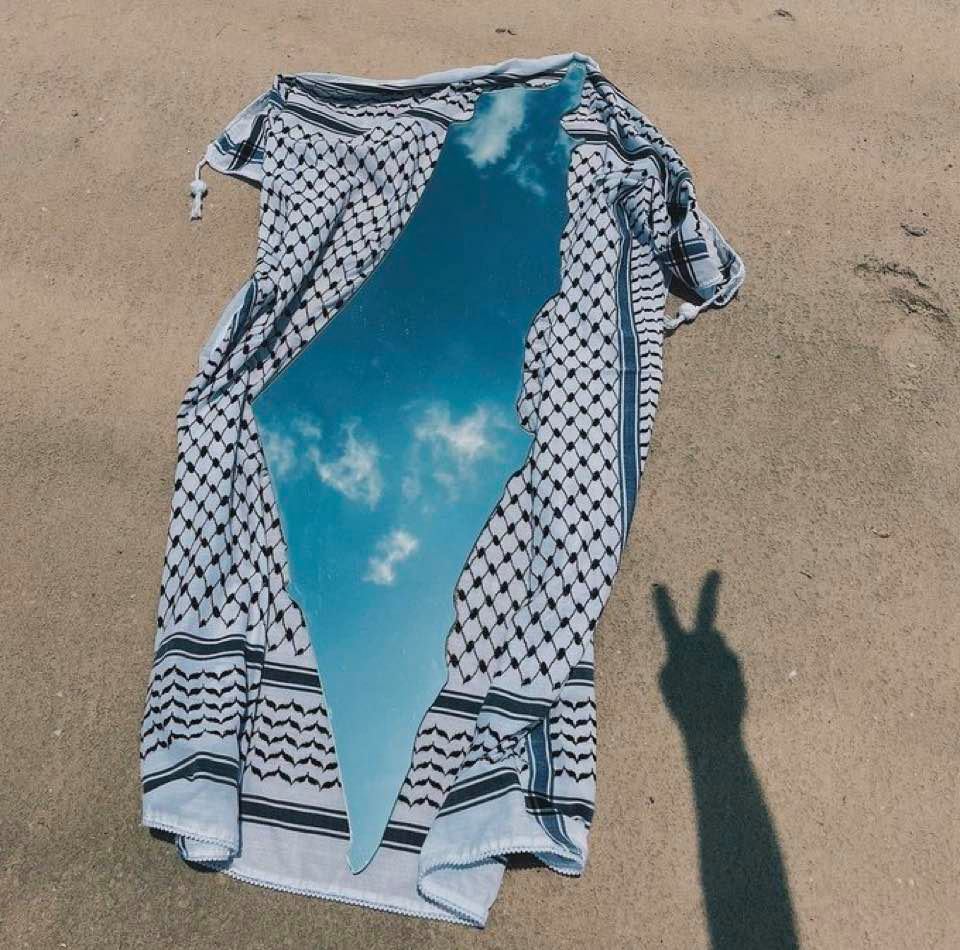
I love this assessment, from the Egyptian leftist Qussay Samak's article "The Politics of Egyptian Cinema," in Merip Reports No. 56 (April 1977). Get it via JSTOR here.

The order for this event was: Credence, The Dead, Iron Butterfly, Sly and Steppenwolf. My memory is that Sly put on the most exciting show. I think for me the attractions were The Dead and Steppenwolf ('Born to Be Wild' was a great hit of summer '68). The Dead were not playing in there proper element, and of course their set was way shorter than the usual. (Alas, this was the only time I ever saw the Dead, or any of the others for that matter.) Iron Butterfly of course we all scorned and thought were way overblown. I guess Steppenwolf was good but I have no memory of them. Nor of Creedence, who were known at the time chiefly for their single, "Suzie Q." They may have played "Proud Mary," which was released shortly after the concert.
Here's a review of the concert, from the Wilmington Delaware Morning News, on Dec. 9. There is much to comment on about the review, but let's just say that where I agree with it is (1) The Dead were not impressive (2) the sound was shitty and (3) Sly & Co. were terrific.

The effect of the Aswan Dam on Nubians, one elderly Nubian told me in the late 90s: "Have you heard of the atom bomb dropped on Hiroshima? The Aswan Dam was our Hiroshima bomb."

The last video shown yesterday (June 13) at the House January 6 hearings featured several insurrectionists explaining that they were present at the Capitol that day because Trump had called them to it. I think this is the last of the insurrectionists interviewed. I noticed that he was wearing a kufiya, but didn't manage to get my camera out in time to take a picture. Luckily my very alert friend Tim did, and he sent this photo to me.

I've written rather extensively about the push by the Palestinian rebels to impose kufiyas on Palestinian males at the height of the 1936-39 revolt, in fall 1938. And I just came across another story about those events, courtesy Zeina Ghandour's A Discourse on Domination in Mandate Palestine: Imperialism, Property and Insurgency (Routledge 2010). This is from her interview with Said Hassan Me'ary, originally from the village of Sha'b, in the Acre district, found on page 113.

I very much like this photo of a Nubian (I presume) kid looking at the photo welcoming USSR Premier Nikita Krushchev on his May, 1964 visit to Egypt. (I apologize for not keeping a record of where I grabbed this from.) I visited Aswan with my family that same year, in November. Here's a photo.


As is often the case, someone sent this to me (thanks, can't remember who did!), and it took some time for me to get around to posting.
In Berlin the popo are keeping a close watch on kufiya wearers.
The kufiya, they seem to have determined, is a sign of anti-Semitism.
(posted May 20, 2022)


The #NoDAPL movement is doing more than bringing people from all walks of life together, it's helping to usher in new ones. Independent journalist Mary Annette Pember reports on the birth of the first baby at the water protector camps in North Dakota:
For Zintkala Mahpiya Wi Blackowl, Sky Bird Woman, the birth of her baby girl at one of the water protector camps in North Dakota was the ultimate act of resistance. Baby, as yet unnamed, was born early in the morning in a tipi on October 12 directly into her mother’s arms as their family slept nearby. The family’s tipi is pitched alongside the Cannonball River. Baby is healthy and thriving. Blackowl plans to take her to Indian Health Service this week for a well-baby check-up. “I birthed her by myself,” said Blackowl, of the Sicangu and Ihanktonwan Lakota tribes. Although her husband and family were sleeping in the same tipi, the birth was a private event. In the traditional Lakota way, the mother gives birth alone. “That space in which we give birth is so holy,” she said. “At one time our people realized that.”
The source is here.
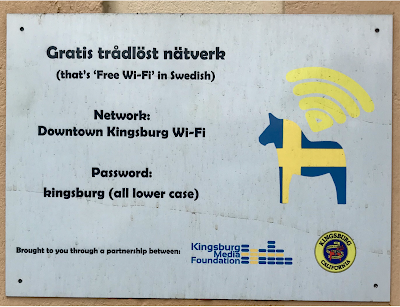
More on Kingsburg and Swedes and Japanese: Last month I made a trip to Fresno for my mother's brother's 90th birthday. I talked to him a bit about my mom and her Japanese classmates. A bit later someone asked him, do you remember any memorable birthdays from when you were growing up?

Clay School (1935-36) grades 6-8, Kingsburg, California. My mom, Bertha Swanson, is the blondish one, a sixth grader. From left to right: Tom Matsumura, Kim Yoshida, mom, Shizuko Matsuoko, Dobi (Robert) Yano, Kazuto Yoshida.
Kingsburg, a half hour south of Fresno, was settled mostly by Swedes, but by the twenties and the thirties it was basically a Swedish-Japanese town. Clay School was a bit out town, served grades K-8, and its clientele were mostly kids of farmers (like my grandfather) or farmworkers. (Note that two of the boys here are not wearing shoes.)
The school building was moved recently to the Kingsburg Historical Park, and I visited it a couple weeks ago with my cousin Dave and brother Ray. I have my mother's 1942 high school yearbook, the year she graduated, and I see that, of those pictured here, Kimiko Yoshida, Shizuko Matsuoko and Dobi/Robert Yano graduated with my mom. Shizuko ('Shiz') and Dobi ('Bob') signed her yearbook. Meaning that, after Pearl Harbor, they continued in school with my mom through graduation. That summer, 1942, they were all sent to internment camps.
I'll have more to say in a future post about Bob Yano, but I know he was interned at Gila River, Arizona, and not long after going there signed up to serve in the US Army. 'Shiz' was interned at Poston (Arizona), possibly the Yoshidas as well. I can't find a record for Tom Matsamura, probably because he is listed in the records under his Japanese first name.
After summer 1942, Kingsburg was no longer a Swedish-Japanese town. Very few Japanese returned there after the war. Today it is simply remembered, and commemorated, as a Swedish-American town.

His archive of photos, from his time in Palestine between 1921 and 1923, is quite remarkable. I particularly like this one, as it shows a kufiya pattern unlike anything I've ever seen before.
For more on Scholten:
Simon Peres, former Israeli PM, former president of Israel, former Defense Minister of Israel, and oh so respected in US official circles, on what he thought of Palestinians wearing kufiyas and tarbushes, when he landed up in Palestine in 1934. From his 1995 book, Battling for Peace.


I have a piece in this new book, about to be released from Pluto Press, edited by Diana Allan.
The book is already a winner of an English PEN Award 2021.
And here is a description:
During the 1948 war more than 750,000 Palestinian Arabs fled or were violently expelled from their homes by Zionist militias. The legacy of the Nakba - which translates to ‘disaster’ or ‘catastrophe’ - lays bare the violence of the ongoing Palestinian plight.
Voices of the Nakba collects the stories of first-generation Palestinian refugees in Lebanon, documenting a watershed moment in the history of the modern Middle East through the voices of the people who lived through it.
The interviews, with commentary from leading scholars of Palestine and the Middle East, offer a vivid journey into the history, politics and culture of Palestine, defining Palestinian popular memory on its own terms in all its plurality and complexity.

Very honored to have been interviewed by Anna Tsykov of Insaniyyat about my work on Palestine, and in particular, my book about the 1936-39 Revolt. Listen here.
Here's what they say about it:
Ted Swedenburg is Professor of Anthropology at the University of Arkansas. His first book, Memories of Revolt: The 1936-39 Rebellion and the Palestinian National Past, is a study of popular memory based on oral interviews with elderly peasants living in Palestinian villages in the Galilee and the West Bank. Since his first book, Dr. Swedenburg’s research has focused on popular music in the Middle East and North Africa. He has also taught at the American University in Cairo from 1992 to 1996. In this episode, Anna Tyshkov spoke with Dr. Swedenburg about his first book, questions and methods of oral history and its relationship to power and the peasant class. They also discuss current politics, and the unified Palestinian resistances surrounding events in May 2021. Dr. Swedenburg shares his personal reflections on the debts of solidarity, and his experience of fieldwork in Palestine.